















Washington Report on Middle East Affairs, November 2007, page 53
Muslim-American Activism
Muslim Family Endures Hate Crime—Again
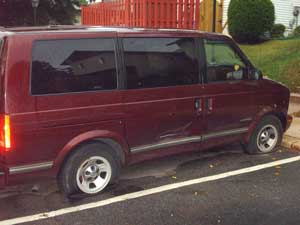
AT 4 A.M. ON the sixth anniversary of the 9/11 attacks, Mohammed Hussein left his home and sleeping family in Gaithersburg, MD, and drove to work, as he does every workday. A few hours later, his wife, Samira, was getting their children ready for school, braiding their daughter’s hair. At 6:45 a neighborhood child who joins them for their daily drive to school walked in and announced, “Your mom’s car has two flat tires.”
Right away, Samira said, she knew. Ten years ago, almost to the hour, the Husseins’ family car tires and upholstery were slashed and the hood defaced. (See Jan./Feb. 1999 Washington Report on Middle East Affairs, pp. 112-117). Her son went outside and discovered that his car’s tires had also been slashed on Sept. 11, 2007.
Since August 1990, during the first Gulf war, the Hussein family has suffered through dozens of hate crimes. Because of their last name, the perpetrator may have assumed they were related to Iraqi President Saddam Hussain. In fact, however, they are Palestinian-American. Their vehicles have been vandalized six times over the years, with “Go Home” and “Pig” scratched alongside previously scratched swastikas on the hoods. The family has endured a steady barrage of smashed glass doors, hate notes, ethnic slurs, dead chickens, beer cans and other trash thrown into their yard, until a former neighbor, who also beat up and taunted her children, was convicted—but managed to avoid his sentence.
Explaining that “my children grew up being fearful,” Samira tried to turn the negative experiences into something positive. She began volunteering at schools and teaching young people about her culture. She now works for the school system and is a tireless, prize-winning advocate for an inclusive curriculum in Montgomery County, MD.
Samira knew just what to do this time around. She called Montgomery County police, and explained her family’s history, telling them this was probably a hate crime. Nevertheless, they wouldn’t come.
Mohammed came home and the children didn’t go to school. They had to be together. “The bad memories jumped back in,” Samira said. Their heads were spinning and they felt numb. They had tried their best to put the past behind them and get on with their lives, Samira told the Washington Report on Middle East Affairs. A few months ago they finally had replaced Mohammed’s defaced vehicle. Now the nightmare was beginning again.
Samira called the Islamic Center and the Council on American-Islamic Relations (CAIR), and community members began to arrive to lend their support. “Do you want to go public with this?” CAIR’s communication director Ibrahim Hooper asked.
“We have to,” Samira replied and within minutes CAIR sent out a press release.
Samira also contacted friends she’d made judging Gaithersburg’s Labor Day parade, days earlier, and the local police. Gaithersburg City police responded and sent a photographer and a detective who knocked on neighbors’ doors. The mayor called to express his concern. By midday, TV stations and The Washington Post came to record the story of this Muslim family who has been victimized even before backlash from 9/11 made many Muslim Americans feel unsafe.
Samira Hussein said she is frustrated by the inaction of Montgomery County police, who she suspects would have come running if the victim had been a Jewish family or synagogue calling for help on this terrible anniversary. “Now we have homeland security and we’re well-equipped to deal with terrorists,” she said, “but where are the police when a Muslim American needs protection? At least we have CAIR and ADC [the American-Arab Anti-Discrimination Committee] to help us now.”
—Delinda C. Hanley














