







Washington Report on Middle East Affairs, June/July 2022, pp. 52-53
Arab American Activism
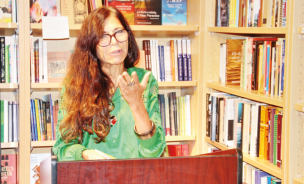
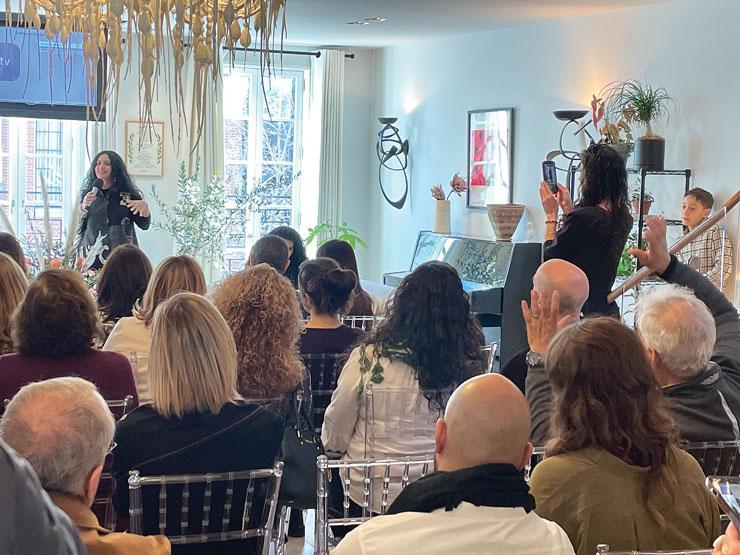
GROWING PALESTINE hosted a luncheon featuring Vivien Sansour, the “Seed Queen of Palestine,” on Feb. 27, at the home of board member Samar Hussein Langhorne in Washington, DC. Langhorne described Growing Palestine’s mission to help Palestinian farmers resist buying seeds from Israel and help them plant long-forgotten Palestinian heirloom and native seeds. Palestinian-American Sansour hopes traditional crop-growing methods will push back against the challenges imposed by the Israeli occupation and resulting water and electricity shortages.
Sansour’s first in-person talk in two years, due to the pandemic, focused on the Palestinian zahra baladiya (homegrown organic cauliflower varieties), which she is helping save from extinction. She passed out a seed to each listener and urged them to hold it and “feel the energy of your grandmother. Seeds are our ancestors, not a commodity, but a product of communal genius,” she said, explaining that generations of farmers tweaked these seeds to improve their crops. Zahra baladiya is buried in soil for nine months, and when it’s harvested it’s worth the wait, she noted.
Sansour said that while she went to Palestine to teach farmers, she instead heard a wealth of stories and learned from them. Every grandmother had a jar of seeds (their own seed library) in her kitchen. Sansour concluded that Palestinian farmers have something to teach drought-stricken Californians and others.
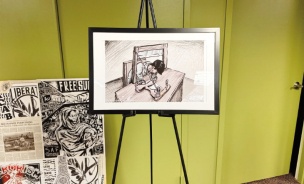
To raise funds for Growing Palestine, board member Nora Burgan auctioned a painting by Ayed Arafeh from Dheisheh refugee camp, depicting a vegetable auction, which is held every morning in Jericho. In a daily act of resistance, Palestinian farmers set their own prices for superior produce, and compete with cheaper produce grown with unlimited water by large agribusinesses in Israeli settlements.
—Delinda C. Hanley