







Washington Report on Middle East Affairs, January/February 2021, p. 61
Diplomatic Doings
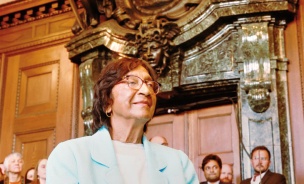
On a Nov. 13 webcast hosted by the Center for Strategic and International Studies (CSIS), U.S. Ambassador to Lebanon Dorothy Shea discussed Lebanon’s economic, political, security and health crises.
The Aug. 4 explosion at Beirut’s port exacerbated all of Lebanon’s ongoing problems, Shea pointed out. The blast was “the last straw for a lot of middle class Lebanese who are fed up with the corruption and mismanagement of the kind that could produce that explosion,” she said.
Lebanon’s caretaker government has caused political paralysis, adding to the dire situation, she said. “There is no real sense of urgency [among the elite and powerful]...to get a new government in place to make the meaningful decisions on everything from reform to tackling the pandemic and digging the country out of this huge hole that it is in,” Shea lamented.
Last March, the government defaulted on its Euro bond debt, which contributed to the currency losing 80 percent of its value, and resulted in many Lebanese losing much of their life savings.
According to the World Bank, half of the population is living in poverty, with 25 percent facing extreme poverty. The World Bank predicts the GDP will contract by 27 percent in 2021. Inflation has increased 120 percent, while food prices are up 367 percent. Since the blast, the price of home furnishings and home goods is up 664 percent.
The United States has made a large investment in Lebanon for decades, trying to support sustainable development and help the country meet its massive humanitarian needs “while also calling out where they need systemic reform to end corruption,” Shea said. “We see a need to help bolster civil society, strengthen state institutions and combat the corrosive influence of malign actors like Hezbollah.”
In addition, U.S. priorities include promoting the rule of law and the independence of the judiciary and helping the younger generation receive a quality education.
Reforms that a new government should implement, according to the ambassador, include reforming the electricity and banking sectors, and conducting audits of the Central Bank, the finance ministry and other key sectors.
Of utmost importance, she stated, is to approve legislation allowing the judicial branch to be truly independent, passing a meaningful budget for next year and organizing parliamentary elections for the following year.
Recently, under the auspices of the U.S. and hosted by the U.N., Lebanon and Israel resumed maritime delineation talks relating to gas fields. “There have been four rounds of talks in the past several weeks and this gives Lebanon a glimmer of hope, as no one knows what is out there in these gas fields,” Shea explained.
“The Lebanese people have been appreciative of the role of the United States in their society,” the ambassador maintained. “When we stand with Lebanon, we are standing with the people—it’s not about the government.”
—Elaine Pasquini