






Washington Report on Middle East Affairs, June/July 2025, pp. 11-13
Daily Life and Shattered Dreams in Gaza—Writers Share Their Stories
By Ahmad Mohmmad Abushawish
TAWJIHI IS A SIGNIFICANT turning point in the life of every young Palestinian. It is not only their final year of high school, it is the final exam that can determine the trajectory of their lives. Students strive to do their best on this test because they know that it, along with their grade point average (GPA), will determine the university they will attend and the field of study they will pursue.
A SPECIAL YEAR FOR STUDENTS AND THEIR FAMILIES
Tawjihi brings a special excitement that both students and their families feel. When I entered my tawjihi year, my family began treating me as if I were their only son. They would stay awake late to make sure I had a quiet and comfortable space to study, and my mother would prepare my favorite meals every day. My siblings, too, kept the house unusually quiet and even spoke about me with pride to relatives, often saying things like, “Here’s our future doctor.” Along with this excitement and special treatment, there was pressure to do well on the test and the anxiety that pressure can create. The year normally ends with celebration as the results of the test are announced online.
In August 2023, I was full of hope for the future as I approached my tawjihi year. I dreamed of a high GPA, being admitted to a prestigious university abroad, and then going to medical school to achieve my dream of becoming a doctor. At the start of the school year, my day would begin with a warm family breakfast of cheese on toast (which I love) with a cup of tea lovingly prepared by my mother. After that, I would walk to school, watching the eagerness on the children’s faces to learn and laugh. The only thing I was afraid of was being late.
After school, I would sometimes walk with my best friend and desk mate, Yasser, to his house, where his mother would serve us her zaatar manakeesh—the beloved Palestinian flatbread topped with a fragrant mix of thyme, sumac and olive oil. Later, I, along with Ihab, Suhaib and Yazan, my best friends since elementary school, would head to an air-conditioned, privately run educational center, where we sat in comfortable chairs and received private tutoring in mathematics. In the evening we would get together at each other’s homes to study. There were days when I saw them more than my own family.
ISLANDS OF NORMALCY AMIDST THE CHAOS
Then the genocidal war began, and our schools and universities became our shelters. When we ran out of things to burn to cook our food, we burned some of our books. We had always looked to books and the knowledge they contained as our most effective weapons against the occupation. Now we needed them as fuel to cook our food and fill our empty stomachs. Then the home of my friend, Yasser, the place we used to escape to after school, was reduced to rubble. My biggest loss came on Nov. 19, 2023, when my friends Suhaib, Yazan and Ihab were martyred. Their murders left me in shock. I began to lose sight of who I was and who I dreamed of becoming. It felt as though the world had abandoned us.
But giving up is not an option for Gazans. My journey to prepare for the final exams now included trying to balance the hardships of war with the duties of studying for tawjihi. It became incredibly difficult to find a quiet place to study after we took in six families whose homes had been destroyed. Each night after everyone fell asleep, the wailing of warplanes and the bursts of gunfire became my study companions. With eyes burning from the dim light, I clung to the books we hadn’t burned for fuel, hoping they could shield me from the chaos outside.
The situation worsened when we were forced to flee our home and live in a tent in Rafah. The only things I could bring with me were the bare necessities—some clothes and bedding. I left behind not just my belongings but also my dream of graduating from high school and continuing my educational journey at a prestigious university.
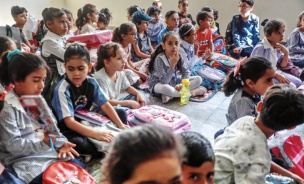
At that time, I was thinking only about how I could avoid being killed in a random Israeli airstrike and continue to pursue my dream. Because I was no longer in school, I searched for people who could tutor me in subjects like math and physics. While I didn’t find tutors, I did find a makeshift school staffed by volunteers that had sprung up in our refugee camp. There were no comfortable padded chairs; we sat on the ground. There was no air-conditioning; our classroom was a humid and scorching hot tent. Despite the hardships, studying in this tent brought me back, even if just briefly, to the academic environment I craved. Learning alongside other students made the experience even more powerful. Being with other students who were also trying to study amidst the horror helped me understand that I was not alone.
Had Gaza not been under constant attack, the excitement of my last year in high school would have peaked on July 29, 2024, when I would have learned how well I did on my final exams. Instead of gathering with my friends and family around a computer to learn our scores as they were released on the internet, we huddled around a crackling fire, as though we had been thrown back to the Stone Age. The disappointment my friends and I felt that day remains etched in my memory. I could see the sorrow and frustration carved into their faces. It felt as though the sacrifices we had made, the effort we had exerted despite relentless bombings, hunger and exhaustion had, in the end, amounted to nothing. It was almost unbearable.
DETERMINED TO HOLD ONTO OUR DREAMS
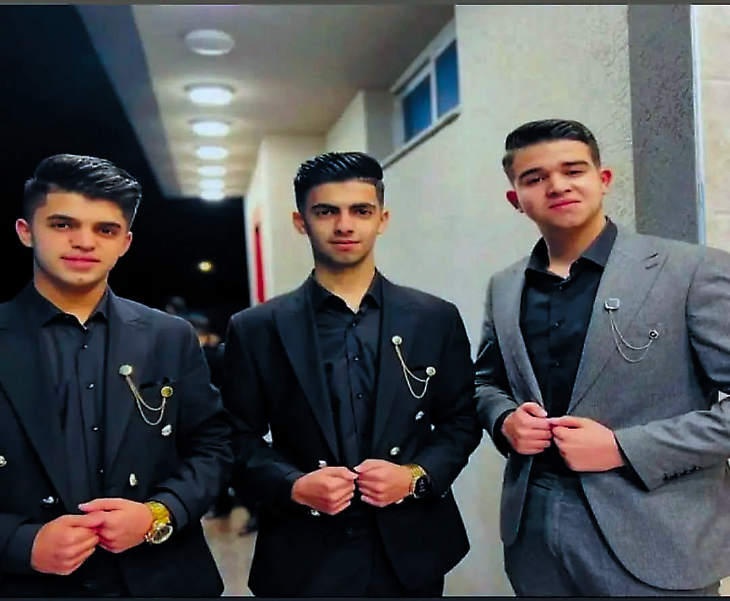
The fate of my generation, the generation of Gazans born in 2006, remains uncertain. As our world collapses, we exist in a space too small to hold our dreams. My dream was to study medicine and become a doctor. My friend Ihab, who was killed early on in the war, wanted to study computer science and become a programmer. Yazan’s dream was to travel the world. Instead, the world watched his death in silence. Other friends dreamed about living peacefully with their families. Instead of pursuing our dreams, we spend our days trying to avoid being killed by a bomb, missile, drone strike or sniper. Every day, our youth fades and our dreams slip further out of reach.
What pained me most was my inability to contribute to the portrait of resilience and resistance that Gaza’s educated elite were painting through their dedication and courage. Scenes of doctors battling against time and a lack of resources to save patients’ lives. Journalists risking their lives to document the crimes of the occupation. Engineers overcoming immense challenges to keep Gaza connected to the world so you could read my words now. I still dream of becoming a doctor and helping to rebuild the health system in Gaza. The war has not taken that from me. But it has made me and my generation less hopeful that we will ever be able to achieve our dreams. It killed my friend, Suhaib, who shared my ambition of becoming a doctor. It destroyed my friend Yasser’s home, shattering his dream of becoming a mechatronics engineer. Despite these losses, I refuse to let them define me. If I cannot be on the front lines saving lives or documenting history, I will use my voice to tell our story.
Ahmad Mohmmad Abushawish was a high school student in October 2023 when the assault on Gaza began. He has volunteered in programs for children (Cooperazione Internazionale Sud Sud, Vento di Tera) and is passionate about dabke, chess and creative writing. He attended the Access Program, a U.S. State Department-funded initiative that offers students from disadvantaged communities the opportunity to learn English and develop leadership, communication and cultural skills. He hopes to get a university scholarship to study in the United States or the United Kingdom.