








Washington Report on Middle East Affairs, August/September 2025, pp. 17-19
Daily Life and Shattered Dreams in Gaza—Writers Share Their Stories
By Deema Fayyad
FOR OVER A YEAR, the Gaza Strip has been closed off. This feels like living in a prison: the jailer has complete power to oppress and isolate us. In March, food aid kits and other goods were blocked from entering the besieged Gaza Strip, resulting in catastrophic famine throughout Gaza. Now, we feel oppressed, isolated and starved.
The shortage of cooking gas and foodstuffs has led to steep price increases in the market. By June, one bag of flour cost a staggering $1,900. Gazans have become completely dependent on canned food, which though still expensive remains the cheapest option for survival.
In the run-up to the famine, my family took precautions by storing two bags of flour and some canned food. This was one of the lessons learned from previous famines, and we have not yet run out of flour. However, each of us can afford only a small daily portion of bread, to make sure the flour lasts as long as possible. Like most, our diet is based on legumes like lentils and canned food like beans and peas. On good days we have tuna.
One day I woke up to the enthusiastic noise accompanying my brother Fadi’s return from the market. We were used to Fadi’s trips resulting in meager things like two onions, a few cloves of garlic or a few spices, if that—often, he would return empty-handed, lamenting the skyrocketing prices. However, this time, Fadi was able to buy many fresh vegetables: potatoes, onions, cucumbers, tomatoes and green chili peppers. Most of these vegetables had not been served on our table for more than 70 days.
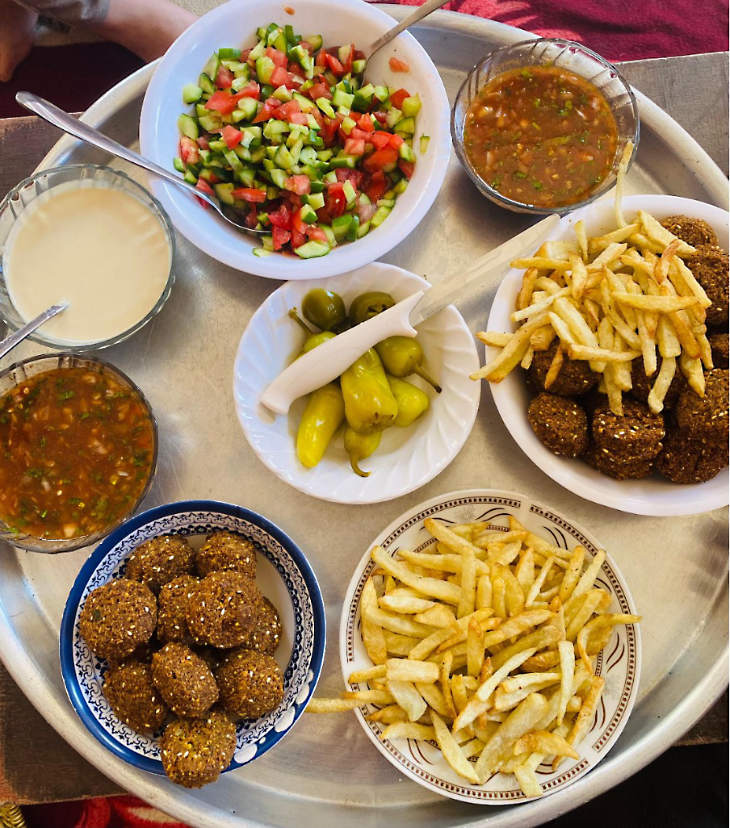
While our faces showed both astonishment and silent questions, Fadi explained, “We can’t have chicken or meat for Friday’s lunch like we used to—but can’t we at least have something fresh?” My older sister Fidaa immediately suggested we make a special meal of falafel with French fries and a fresh salad. It didn’t take long for everyone to agree and get excited—especially the children, who filled the place with joyful chaos.
Fidaa began making the falafel mix. I took it upon myself to cut the potatoes. I held each potato carefully, as if I were holding a jewel, and peeled it gently, trying my best not to waste any. As I cut it, I sensed something I hadn’t felt in a long time. I recall my brother Fadi’s funny comment when I accidentally dropped a tiny piece of potato on the floor. He exclaimed, “Girl, you better watch out—you just dropped $1 on the floor!” His comment led us all to uncontrollable laughter; it was as funny as it was painfully real.
Later, my brother-in-law Anas finished cutting the wood into small pieces in preparation for cooking and ignited the fire. Fidaa began frying falafel over the open flame while Anas kept feeding the fire with one piece of wood after another under the pot. I can’t fully convey the real suffocation of this particular cooking stage, as the smoke spread everywhere and pierced our eyes—especially Fidaa’s, exposed as she was over the hot flames. As our eyes shed tears over the fire, for a moment they became tears of grief over everything we lost. But then, just as we’ve been doing for the past year and a half, we wiped our tears and carried on—because this life has left us no other choice.
In another corner, my mother was preparing some appetizers: tahini, which is a must with falafel, and Turkish salad, which we finally had the tomatoes to make.
My mother was happiest about preparing the salad. She smiled as she cut the cucumbers and tomatoes and then sighed before saying, “Oh, thank God for the blessing of fresh vegetables. Let’s compensate a little for the lack of vitamins in our bodies.” My mother is the healthiest person in our family. She cares deeply about nutritious food. Nevertheless, the war deprived her of this interest, leaving behind mostly unhealthy choices like white bread and canned food. I’m sure that salad was the dearest dish to my mother’s heart that day.
The final step was heating the bread. To heat it over an open flame would burn it, so instead I put hand sanitizer that contains alcohol on the cooker and ignited it to heat the bread. The process may take ages due to the low flame, but the result is tender, hot bread.
Our most luxurious meal in a long time was finally ready to be served. We had hot, crispy falafel and potatoes; colorful plates of fresh salad decorating our table; tahini; and even homemade pickles. Everything was perfect—beautiful enough to whet anyone’s appetite. Everyone was extremely excited about this special meal, which had cost so much money, time, effort and many smoky tears.
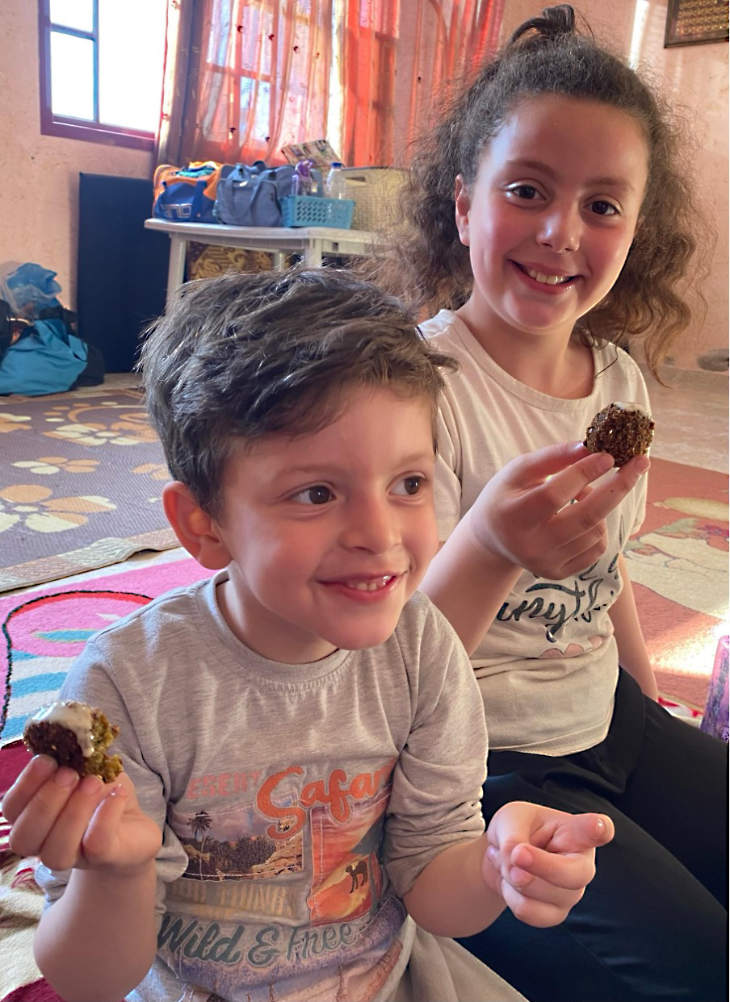
I served the meal while excitedly asking the children, “Who wants falafel?” Thunderous shouts of “Me!” pierced the air in response. We all ate with great pleasure, but the children’s joy was especially moving. I remember Basma—my eldest niece—her eyes glistening as she ate a falafel sandwich. “Oh God, this tastes so good! I never thought I loved falafel and potatoes this much. I feel like I’m over the moon!”
Basma’s comment truly mirrored our thoughts at that moment. It was the best falafel meal we had ever had. In fact, everything we’ve been eating during these difficult days tastes ten times better. Since childhood, we’ve eaten falafel sandwiches with potatoes and vegetables for breakfast or dinner so often that we grew tired of them. We never imagined the day would come when we’d eat them with so much eagerness and longing. And we definitely never expected to one day consider our once-humble daily meal a rare luxury.
Deema Fayyad was born and raised in Khan Younis, Gaza. She was forcibly displaced to Deir Al-Balah during the ongoing war. Earlier this year, she entered her fourth year as an English translation major at the Islamic University. She is training with We Are Not Numbers (WANN), a project to amplify the voices of young Palestinian writers.