






Washington Report on Middle East Affairs, January/February 2023, p. 56
Waging Peace
ON NOV. 29, the Gulf International Forum held a panel discussion on its new report, “Women, Peace and Security: Gulf Perspectives on Integration, Inclusiveness and Integrity,” which was organized in partnership with the U.S. Mission to NATO.
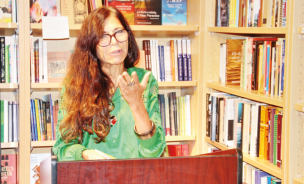
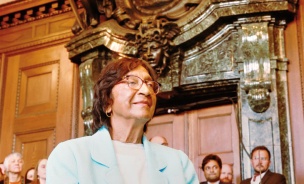
The session included the following speakers: Ambassador Rend Al-Rahim, co-founder and president of the Iraq Foundation and former Iraqi ambassador to the U.S.; Dr. Banafsheh Keynoush, president of MidEast Analysts; Maali Al-Asousi, former director of Direct Aid in Yemen; and Dr. Mira Al Hussein, non-resident fellow at the Gulf International Forum and a postdoctoral researcher at the University of Oxford.
Low levels of formal representation are one challenge facing women in peace and security. Al-Rahim believes that international scrutiny of the Iraqi parliament led to the creation of documents that mandate key roles for women, including the 25 percent quota for women in parliament set forth in the Iraqi constitution of 2005. By 2021, female representation in Iraq’s parliament reached 29 percent, exceeding the mandated level. However, she explained this has not translated into real influence on issues of national security, nor clear parliamentary effectiveness, and women’s voices remain absent from male-dominated circles that are decisive in setting security policies.
Al Hussein emphasized the same point by focusing on the fact that the appointment of women to leadership positions in the Gulf is aimed at containing international criticism and achieving high rankings on global indices of gender equality. According to Al Hussein, “In the Gulf, women’s inclusion is determined by their acquiescence to the state and its official narrative, and their ability to serve the state’s mission…They’re the soft power of the state, a public-facing image of the state that beautifies the message. It could be a message about ‘let’s purchase these fighter jets and let’s go bomb this country,’ but it’s nicer when it’s said by a woman, it’s less malignant.”
In Iran, women are similarly welcomed into government only if they don’t question official policies and practices, including those biased against women. “Gender sectarianizing, therefore, happens, perpetrated by the state, and its policies of exclusion of women who do not subscribe to state-led security policies or state-dictated forms of nationalism,” Keynoush said.
Furthermore, women are not empowered in diplomatic and academic fields despite their ability to play a broader role in peacemaking. In the words of Al-Rahim, “Now we have many think tanks [in Iraq]. Women are absent from these think tanks, they are not represented, whether by default or choice. Women really need to enter these knowledge-rich and policy-rich environments and platforms because that’s how you get known.”
Civil wars in some countries of the region have caused social gaps that seriously impact the role of women. Al-Asousi pointed to two main gaps in Yemeni society: first, the emigration of activists and influencers abroad, and thus the loss of their initiatives, expertise and abilities to limit conflicts; and second, the closure of most embassies, which has led to the suspension of many community development programs and projects, with local initiatives becoming weaker and lacking the necessary funding and sponsorship. Most international organizations and commissions have begun to focus primarily on humanitarian aid and have neglected the empowerment of individual activists and the building of social capabilities, she noted.
The participants proposed various ideas for dealing with the challenges impeding women’s participation in the fields of security and peace, including international sponsorship of awareness programs about the importance of empowering women in peacebuilding processes; inclusion of expatriate activists in national dialogues on women’s empowerment; the continued imposition of women’s participation in legislatures to break stereotypes about the role of women and facilitate their assumption of leadership positions; and promoting education as a mechanism for achieving women’s financial security and enabling them to assume leadership positions.
—Mona Ali