















Washington Report on Middle East Affairs, August/September 2021, pp. 40-42
2021 Conference Magazine
By Richard Falk
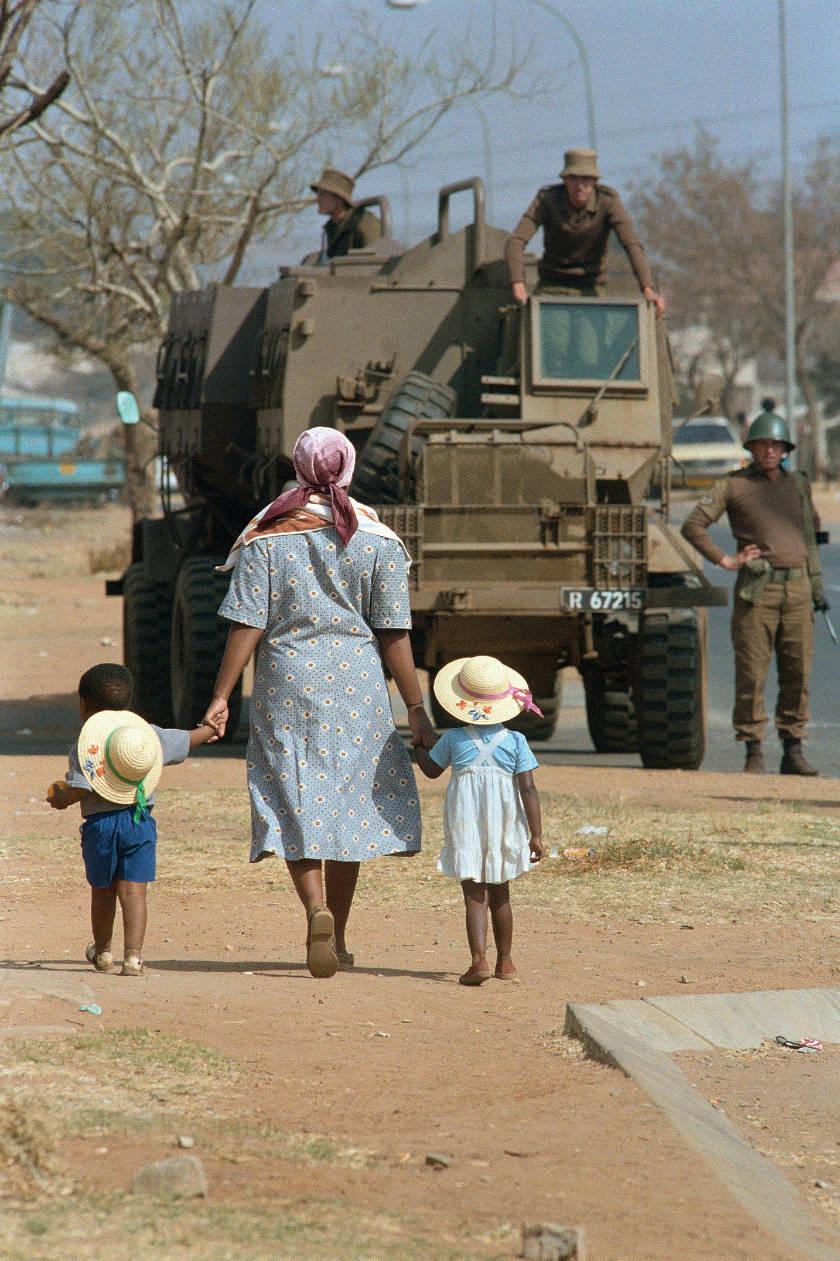
I VISITED SOUTH AFRICA in 1968, which is about 53 years ago, to be the official observer at a political trial of Southwest Africans as they were then called, now Namibians, who were being prosecuted for their resistance activities. It was John Dugard, who was then a rising young jurist in South Africa, who really showed me on the ground what it meant to live in an apartheid regime. I’ve benefited through the years from his knowledge, wisdom and experience.
I am going to comment on B’Tselem's recent report on Israeli apartheid. B’Tselem is a leading Israeli human rights NGO that has been widely admired by many people around the world for its forthright reporting on human rights violations in the occupied Palestinian territories. The report makes clear that its original intention was not to deal with any issues other than that, other than what was going on under occupation.
I think it’s quite interesting that this respected NGO issued on Jan. 12th of this year, a report with the title, “This is Apartheid: A Regime of Jewish Supremacy from the Jordan River to the Mediterranean Sea.” It’s significant, I think, that this conception of apartheid is expressed in the title itself because what B’Tselem says, and it’s very compelling to me, is that the situation since 1989, when they originally were established and where they limited their mandate, that that situation no longer exists. And that one can no longer really differentiate meaningfully between the occupation and Israel itself. And that’s quite a radical conception. One that goes beyond saying that under the occupation of the West Bank and East Jerusalem, an apartheid structure has been imposed.
One of the reasons that they give in the report for enlarging their own mandate beyond the OPT and for the radical conclusion that Israel itself is subject to an apartheid analysis is in understanding the situation of the Palestinian minority, which numbers about 17 percent of the population behind the Green Line.
The two reasons they give is, first of all, that as a matter of public acknowledgement, the Israeli leadership no longer respects the temporary nature of annexation or occupation. I should say that Netanyahu and other Israeli leaders speak openly about annexing formally, as they have done in Jerusalem and significant parts of the West Bank, and already having annexed in a formal way East Jerusalem.
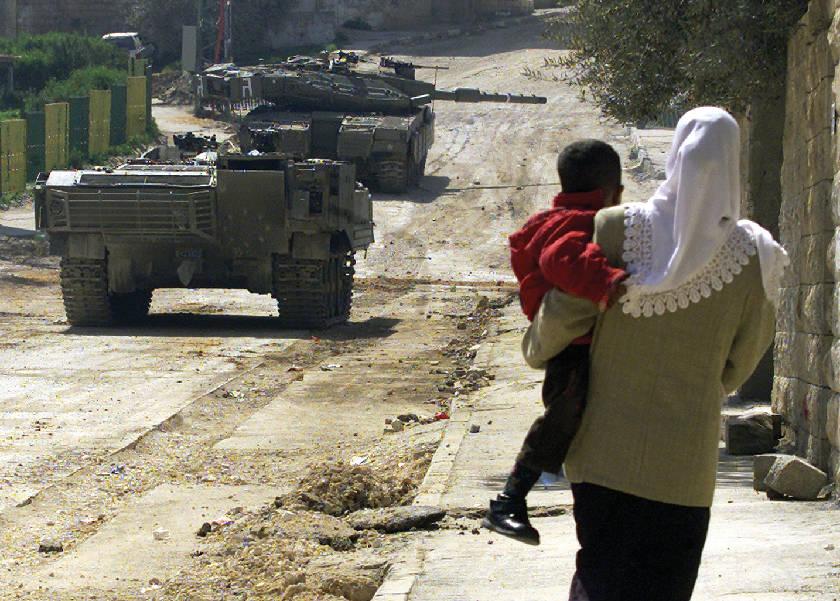
So, the implication in the report is that annexation makes it artificial and not really satisfactory to distinguish between the occupation and Israel itself. In other words, that Israel itself comprises the territory that formally remains under occupation. They reinforced that analysis with the related understanding that even without formal annexation, the realities for the people living on the West Bank is total Israeli control. And that Israel and the Jewish settlers operate as if, for Jews, there’s no real difference between Israel proper and the circumstances of the several hundred thousand settlers who live in these armed settlements that are unlawful from the perspective of international humanitarian law.
So, annexation, de facto annexation takes over, in this sense, from the notion that goes back to the partition that one should treat the historical mandate territory of Palestine as divided between the two peoples. What underpins this conclusion is the idea that Palestinians under occupation and in Israel are living beneath the shadow of what the B’Tselem report calls Jewish supremacy, and that the essence of Jewish supremacy is a structure of discrimination based on ethnic identity.
That analysis is further reinforced in the report of the adoption, by the Israeli Knesset in 2018, of a so-called basic law which corresponds really to a constitutional assessment of the relation between Jews and Palestinians. It became very clear that only Jews—it’s stated very clearly in the basic law that only Jews—have the right of self-determination within Israel. And that only Hebrew is an official language and that the extension of the settlements in occupied Palestine is integral to the territorial identity of Israel.
And so, the Knesset by itself really gives a fairly strong reinforcement to the allegation of apartheid that has now become really quite normalized in the understanding of the situation that exists and confronts the Palestinian people. And no longer is something that is just applicable to the relation between the military administration of occupied Palestinians and the way in which the settlements and the settlers are governed.
The question that I would raise in relation to the B’Tselem report is one of whether it is appropriate really to limit the notion of apartheid in the manner that they do; to an enlarged space rather than to the Palestinian people as a whole. I collaborated in a U.N. study, that was published in 2017, that adopted the view that the essence of the kind of apartheid regime that the Palestinian people are subjected to is better understood in terms of policies and practices of Israel by reference to people not space, and, therefore, incorporates the Palestinian refugees who have been confined for decades to refugee camps and are denied the possibility of repatriation in the places of their residence which they originally abandoned back in 1948 and subsequent periods including ’67.
So, the point that I think is important to understand conceptually is whether one thinks of apartheid, as has been more conventionally done, as a feature or dimension of the way in which occupation over those long periods since 1967 has been implemented. Or whether one thinks of it in the B’Tselem way of extending the notion of apartheid to what they call all the territory from the Jordan River to the Mediterranean Sea, which is to say the historic Palestine as it emerged from the Ottoman Empire after World War I. Or the third way, which is what I favor doing, which is to enlarge beyond the B’Tselem notion to incorporate the refugees and involuntary exiles in one’s understanding of what apartheid consists of.
Let me say also that the B’Tselem report is very helpful in analyzing why they come to the conclusion that the policies and practices of Israel have the characteristics of apartheid that can be both compared to South Africa but also should be distinguished from it. The core of the apartheid notion, as an international crime at the present time, is the structures of domination that involve the victimization of a subordinate people, ethnicity or race, and the supremacy of a dominant people or race. In other words, the division is one based on some form of categorical identity.
What the B’Tselem report points to are four areas where this kind of discriminatory racialized identity is relied upon. First of all, with respect to immigration, only Jews have an unlimited right, however slender their connection with Israel or even Judaism is, to immigrate—that there’s a right of return. And contrariwise, that Palestinians and generally non-Jews have no right of immigration other than what may be granted in exceptional circumstances by the minister of interior or the military commander in the West Bank.
Secondly, land has been appropriated from the Palestinians at a steady rate ever since the 1948 war. At the present time as much as 90 percent of the land under Israeli control belongs to Jews and less than 3 percent of the land is now owned by Palestinians. Beyond this is that Palestinian residence is manipulated in such a way as to confiscate the land of Palestinians that for one reason or another either are absent for a period of time or have violated rules governing the use of the land.
A third feature, which is primarily associated with the occupation, is restrictions on the Palestinian freedom of movement which are very stringent, which have made the lives of Palestinians very stressful—all kinds of checkpoints that are consistently present or maybe put in place, the so-called flying checkpoints. And, the blockading and treatment of Gaza, being one where there are not checkpoints internally but there’s a stringent restriction on going into Gaza or leaving Gaza.
Finally, the restrictions on Palestinian participation in either the normal political life of Israel or in the elections that Palestinians administer or are supposed to administer in the occupied territory but which Israel interferes with to make sure that the outcomes do not challenge its way of governing. At the present time there’s supposed to be elections on May 22, but Israel has taken the position that Palestinians in East Jerusalem, which number about 350,000, will not be entitled to vote in those elections because East Jerusalem is now formally part of Jerusalem, which is part of the sovereign territory of Israel.
The Palestinian Authority has countered with the view that, unless Palestinians in East Jerusalem vote, it will not hold the elections. Some people feel that is just an excuse by Mahmoud Abbas to avoid elections that have not been held for the past 15 years. [Palestinian elections were cancelled.] We don’t know what the real explanation is, but we do know that these four characteristics of the policies and practices of Israel have constituted a form of discriminatory fragmentation that has rendered the lives of Palestinians as one of pervasive and severe misery.
I think the last thing I would do is to call attention to the end of the B’Tselem report, which says that one must not give up the struggle for human rights. But it’s also incumbent upon those that engage in that struggle to say that there must be an end. We must first say no. In their language, we must first say no to apartheid. That, in other words, as long as this apartheid structure persists, there is no path to a sustainable peace that recognizes basic Palestinian rights.
I think that’s a very important bottom line. That this structure, however one labels it, whether it’s called apartheid or not, is a decisive obstacle to a rendering of a peaceful form of coexistence between these two peoples. And unless that apartheid regime is dismantled in the manner it was in South Africa—under pressure from not governments so much as from the combination of global solidarity, a campaign backed at the time by the U.N., and resistance efforts by opponents within South Africa and the neighboring countries. In other words, it was only resistance and global solidarity that led the South African elite to recalculate their interests in such a way as to finally make the choice that John Dugard referred to as a miracle of a peaceful transition to a multiracial form of constitutionalism.
I think it’s not a miracle but a way in which the accumulated pressures of symbolic politics deriving from law and morality, create a pariah status for a country that practices apartheid in such a way that it does really challenge that leadership elite to think again about whether they want to exist in opposition to the moral and legal sentiments of the world and have consequences following from that or whether they want to live in a peaceful society based upon equality and justice for people regardless of their racial or religious identity.
Richard Falk is the Albert G. Milbank professor emeritus of International Law at Princeton University. He is currently chair of Global Law at the law facility of Queen Mary University, London. In 2008, he succeeded John Dugard as the U.N. Special Rapporteur for Human Rights in the Palestinian territories, and he served in that position until 2014. He is the author of numerous books, including Israel-Palestine on Record: How The New York Times Misreports Conflict in the Middle East, which he co-authored with Howard Friel; and Palestine: The Legitimacy of Hope. His political memoir, Public Intellectual: The Life of a Citizen Pilgrim, was published in March.















