Washington Report on Middle East Affairs, August/September 2021, pp. 72-73
Obituaries
Compiled by Delinda C. Hanley and Nathaniel Bailey
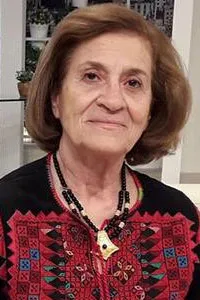 Siham Abu-Ghazaleh, 80, died June 26, in Kuwait from cancer. The Jaffa-born Palestinian worked as assistant director of the Cultural Department at Kuwait University from 1972-80. For nearly 50 years she tirelessly promoted Palestinian embroidery, a symbol of Palestinian national identity. Her book, Sew to Speak: A Woman's Journey to Preserving Palestinian Identity, published by Interlink, will be available this fall. Publisher Michel Moushabeck lamented, “We are also heartbroken that she died only a few days before seeing a finished copy of her lavishly illustrated and beautifully designed book.” Abu-Ghazaleh described the Palestinian dress as the “language” that each Palestinian city or town uses to convey its identity, culture and history.” Her book also provides a history of the General Union of Palestinian Women, which later became the Palestinian Cultural Center. The organization empowers Palestinian women and their families to become self-sufficient and raises funds for education and social welfare programs. It also provides needlework projects for needy women to help them support their families. Its embroidery exhibitions raise funds for university scholarships for top Palestinian students.
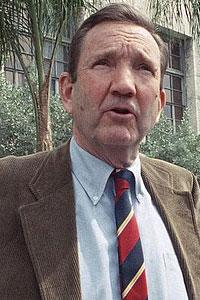 Ramsey Clark, 93, former U.S. attorney general and renowned international human-rights attorney who stood against U.S. military aggression worldwide, died on April 9 in New York City. Clark was the last surviving member of Lyndon B. Johnson’s cabinet and spent decades in public service. Clark helped draft the two historic U.S. Civil Rights Acts of 1964 and 1968, the Voting Rights Act of 1965, and was key enforcer of federal desegregation orders. Once out of government, Clark focused on U.S. foreign policy, traveling to more than 120 countries to meet the victims of war and sanctions to express solidarity with oppressed peoples, from Palestine to India to South Africa. Clark famously traveled through Iraq in the midst of intense bombing during the 1991 U.S. Gulf War to bring back the only uncensored film of the war. For 12 years, until the 2003 U.S. war and occupation, Ramsey led an international campaign against the U.S. blockade and sanctions which killed more than 1.5 million Iraqis. Throughout his life, Clark filled his work and advocacy with an unwavering belief that human rights meant the right to peace, equality and social justice.
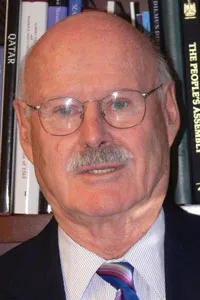 Dr. Michael Craig Hudson, 82, a respected expert on the Arab world, died on May 25 at his daughter’s home in Tucson, AZ, from cancer.
He received his Ph.D. in political science from Yale University. As an exchange student in Beirut, Lebanon, he witnessed the first ever U.S. combat operation in the Middle East, when Marines stormed the beaches of Beirut, surprising sunbathers during Lebanon’s 1958 civil war. His time in Lebanon sparked a lifelong interest in the Arab world, as well as U.S. foreign policy and diplomacy. His Ph.D. dissertation on political modernization in Lebanon became a well-received book in 1968, The Precarious Republic: Political Modernization in Lebanon. He taught at Brooklyn College and then the School for Advanced International Studies, at Johns Hopkins University.
In 1975, he joined the School of Foreign Service of Georgetown University as director of the Center for Contemporary Arab Studies and accepted an endowed position as professor of international relations. The center challenged the Orientalist centers for Middle East studies in the U.S. and Europe. It focused on the contemporary study of the Arab world, while most Middle East or Near East studies focused on the ancient world and the historical region. The university hired faculty from different disciplines to teach contemporary Arab politics and emphasized everyday Arabic instead old holy and literary texts.
After the loss of his beloved wife of 44 years in 2007, Palestinian-Lebanese biologist Vera Wahbe Hudson, he left DC to become founding director of the Middle East Institute of the National University of Singapore from 2010 to 2014.
“In a long career, Hudson challenged key Western misconceptions about the Arabs and their politics and pushed against Zionist influence in the academe,” his former student Prof. As`ad AbuKhalil wrote in an article published in Consortium News. “Hudson (who served as president of the Middle East Studies Association) was one of the most influential Western academics on the region, and he lectured on the Arab world worldwide. His imprint on Middle East studies was big, and was felt when he retired from Georgetown in 2012.” When AbuKhalil admitted to his dissertation adviser that he had no plan after earning his Ph.D. from Georgetown, Hudson suggested he try teaching. “I said: I don’t think I would like it. He asked: have you ever tried it?...And on the very first day of class, I discovered my calling and my career. I remember walking home and saying: teaching, teaching. For that—and for much more—I feel indebted to Michael C. Hudson.”
Dr. Hudson’s grand legacy is the impact he made on generations of exceptional students.
 Suha Jarrar, 31, a legal researcher and advocacy officer at the Ramallah-based Al-Haq, a Palestinian human rights organization, died of a heart attack at home in Ramallah on July 11. She studied in Canada and earned her Master’s in climate change science and policy in the United Kingdom. Some of her most prominent work focused on the environmental effects of Israeli occupation. Her mother, Khalida Jarrar, a senior Palestinian politician and member of the Legislative Council, is at the end of her latest two-year sentence as a political prisoner. She has spent most of the past six years behind bars, denied her civil rights, the right to freedom of association and now denied the right to say goodbye to her child. Israeli authorities denied requests for the mother to attend her daughter’s funeral. “Depriving a mom, long unjustly detained, from saying goodbye to her daughter reflects pure cruelty, which underlies the Israeli government’s apartheid,” Omar Shakir, Israel and Palestine director for Human Rights Watch, posted on Twitter.
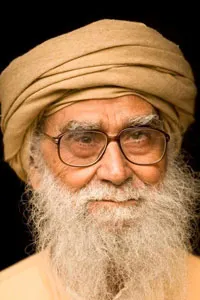 Maulana Wahiduddin Khan, 96, Indian Islamic scholar and peace activist, died April 21 in New Delhi after contracting COVID-19. Over the course of his life, Khan authored more than 200 books. Born in India in 1925, Khan gained recognition after a 15-day Shanti Yatra (peace march) through the western Maharashtra state in the wake of the demolition of the 16th-century Babri Mosque by Hindu hardliners in the state of Uttar Pradesh in 1992. In 2001, he established the Centre for Peace and Spirituality to promote and reinforce a culture of peace in his country and around the world. In 2009, Georgetown University’s list of 500 Most Influential Muslims of 2009 named Khan “Islam’s spiritual ambassador to the world.” In January 2021, Khan was awarded the Padma Vibhushan, India’s second-highest civilian honor.
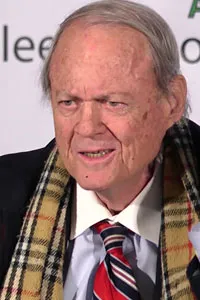 Martin F. McMahon, 75, died June 5, in Washington, DC, from kidney disease. A graduate of Fordham University Law School in New York, McMahon was an experienced litigator who tried cases all over the country. After working with the Securities Investor Protection Corporation, where he oversaw significant litigation matters in New York, he entered private practice. In 1978 he established his own law firm in Washington, DC. McMahon stood with American Muslims, when others did not, leading the Council on American-Islamic Relations (CAIR)’s civil rights work in the organization’s early years.
He was dedicated to advancing the interest of the proverbial underdog—including Palestinians. He filed a lawsuit seeking $1 billion in damages from those who enabled the settlements and the settlers to commit war crimes, including genocide, ethnic cleansing and denationalization. Specifically, he sued Binyamin Netanyahu, Miriam Adelson, AIPAC (and assorted AIPAC operatives), David Friedman, Jared Kushner, Jason Greenblatt, Donald Trump, Mike Huckabee, Rudy Giuliani, Andrew Cuomo, Newt Gingrich, Mitch McConnell and quite a few others in the U.S. District Court in the District of Columbia. (He described that lawsuit at the March 2019 annual Israel Lobby conference co-sponsored by the Washington Report and the Institute for Research: Middle Eastern Policy). McMahon gave generously of his time, talent and passion for justice without thought of personal gain.
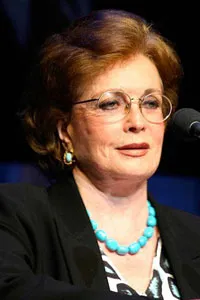 Dr. Jehan Sadat, 87, widow of Egyptian President Anwar Sadat, died July 9 in Egypt from cancer. At 15 she met and married her 30-year-old husband, already a local hero and newly released from imprisonment for his political activities. They were married for 32 years and had four children. As first lady of Egypt from 1970-1981, she used her platform to advocate for women’s rights, medical care and rehabilitation for wounded Egyptian soldiers and visually impaired children, as well as homes for orphans, help for cancer patients, as well as many other causes. She encouraged her husband to visit Israel in 1977 and sign a controversial peace agreement in 1979. After her husband’s assassination put an end to nearly 11 years as first lady, in 1986 she earned a doctorate in comparative literature from Cairo University. She put her education and years of public service to good use, serving as a visiting professor at American University, University of South Carolina and Radford University. In 1997, she created an endowment to establish the Anwar Sadat Chair for Peace and Development at the University of Maryland in College Park, occupied by Professor Shibley Telhami.
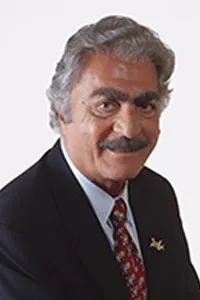 Abdul Aziz Said, 90, a leading scholar in the field of peace studies, died Jan. 22 in Washington, DC from pneumonia. Said was the director emeritus of the American University Center for Global Peace and the university’s longest-serving tenured professor. Said was born in Syria in 1930, where he experienced political violence from a young age. At the age of 9, his brother was struck and killed by a French military truck in Syria, an event which inspired his life’s work resolving political conflicts without violence. Said established the Center for Global Peace in 1995 as part of American University’s School of International Service, the department where he taught international relations for 59 years until his retirement in 2015. Said organized workshops and hosted international conferences at A.U., focusing on education, economic development, human rights and social justice. With his vast experience, Said was a go-to expert for U.S. ambassadors and Foreign Service officers.