















Washington Report on Middle East Affairs, August/September 2021, pp. 47-51
2021 Conference Magazine
By Ian Williams
THERE’S A LOT OF STUFF that feeds into what we have to say about the U.N. and the influence of the lobby. It’s not just in the Middle East, it’s the entirety of U.S. foreign policy that’s been put in question by this slavish support for Israel. You just can’t give slavish support to Israel, and support the United Nations Charter. So, in effect, such support for Israel involves repudiating the 1945 U.N. Charter that FDR [President Franklin Delano Roosevelt] and the U.S. fought so hard for. It means challenging the whole role of international law, of humanitarian order.
There’s no way that the U.S. can go to the Serbs and say, “you can’t treat Kosovars like that”—well, you can do it. But the U.S. can’t do it with a straight face when they’re countenancing what’s happening in the occupied Palestinian territories. You can’t go to Syria and say, “you can’t blow up people like that, it’s against humanitarian law.” But it’s OK for our Israeli ally to use white phosphorus? You can’t say “it’s OK for Saudi Arabia to put journalists through meat grinders” and then turn around and say, “look at what those Iranians are doing.” It detracts from the whole point of a principled foreign policy.
This comes up a lot. Is the U.S. foreign policy toward Türkiye based on whether Erdogan is a good guy or a bad guy at any given moment? No. It’s based upon whether Erdogan and the Turks are sympathetic to Israel or not. Right down the line this comes up. And we’ve had several egregious examples recently. In particular, over Kosovo.
I supported independence for Kosovo. In my columns in the Washington Report, I pointed out that the apartheid declaration applied to how the Serbs treated the Kosovars. It was quite explicit. So we support them, but then we get this [Sept. 2020 economic normalization] deal between Serbia and Kosovo in return for them both accepting Jerusalem as the capital of Israel. It’s not due to the inherent merits of whether Kosovo deserves to be independent or not, or whether Serbia should be forced to make peace with some American pressure, it’s about what Israel wants.
Western Sahara is another issue which I’ve dealt with for many years in my columns in the Washington Report. I think that Trump’s declaration—his so-called recognition of Morocco as the titular owner of Western Sahara—has no validity in international law. I don’t think the State Department echoed it. I don’t think they’ve declared on it. One of the tests for Biden’s independence will be whether he says, “no, that’s not true, that’s an occupied territory by U.N. declarations and resolutions that we, the U.S., have supported.” Western Sahara is occupied, but because Morocco has toadied up to Israel Trump supported Morocco’s claim to the territory.
We come back to the key point in U.S. international politics. It is that the road to Washington goes through Israel for almost every country. How nations vote at the U.N. about Israel means that they think that they will get a sympathetic hearing and the Israel lobby behind them. It has completely deleterious effects.
Morocco has opposed Israeli policies on paper but supported them in fact for many decades now—it’s done so because that’s the way it gets support in Washington. Türkiye for many years supported Israel because that’s the way it got support in Washington. Now Türkiye doesn’t feel it needs support from Washington because it can get weapons from Russia. And Türkiye is giving the finger to everybody concerned on this. But it’s not a good way to think about foreign policy.
We come back to South Africa. I have to confess, I started writing a book on the Israel lobby many years ago which I wish I had completed. But I did a lot of research for it. One of the things that intrigued me was how the Congressional Black Caucus allowed Israel to be the major conduit for weapons into South Africa and for diamonds out of South Africa. So while we’re calling for a boycott of South Africa, we’re keeping the tap open in Israel.
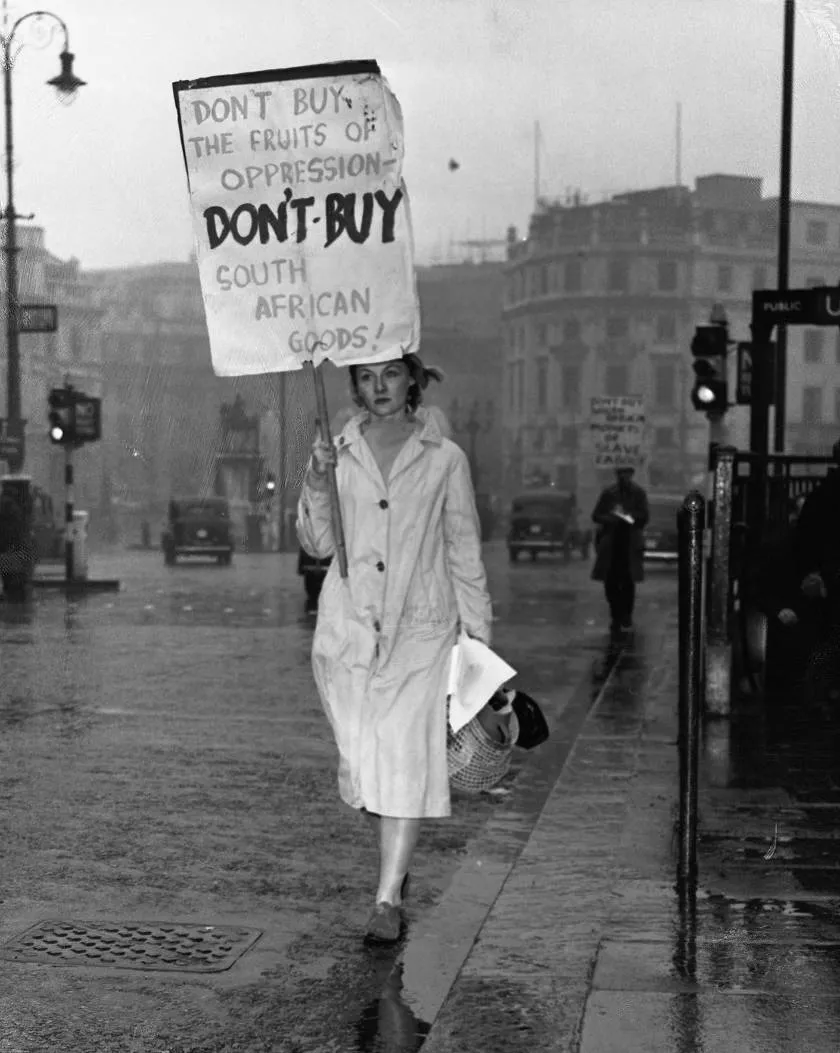
I asked Rabbi Arthur Hertzberg at New York University, “How did you manage to keep the Congressional Black Caucus in hand? Why weren’t they calling for a boycott of Israel as part of the boycott of South Africa?” He said, “You know, you’re very clever. I negotiated the treaty with the Congressional Black Caucus. The deal was that we would support them on all their domestic issues as long as they didn’t raise the question of Israeli ties to apartheid.” And that deal held. That deal held, far tighter than the NATO treaty. It’s held until very recently. So all ethics fly out the window—because it’s expedient for one country [Israel]. It comes up over and over again in the case of the United Nations.
Let’s look closely at the United Nations. The U.S. set up the United Nations. It was FDR’s creation. The Universal Declaration of Human Rights was written by his wife pretty much. But Resolution 181 of the U.N. in 1947, which marked the foundation of the State of Israel, basically it’s the legitimization—not Moses’ tablets coming down from Mt. Sinai—but Resolution 181 is the title deed of the Zionists to Israel. There are no other documents.
With the Balfour Declaration, one eccentric civil servant writing a memo to try and get support for Britain during World War I does not constitute a legitimate international transfer. I think it was Monty Python who said, “strange women lying in ponds distributing swords is no basis for a system of government.” So neither is the Balfour Declaration a legitimate transfer.
By the way, we tend to forget Stalin and the Soviet Union were eager proponents of the foundation of Israel. But even then, I know from my research at the U.N., the Jewish Telegraphic Agency, which was acting as a de facto pre-Israel embassy, intensely lobbied to support Resolution 181. Huge pressure. We know they put pressure on [President Harry] Truman as well. But that war of attrition has carried on since then and sort of raced forward.
One famous resolution, which was spoken of with such horror and disdain, was the resolution in 1975 which declared Zionism a form of racism and racial discrimination. It was finally repealed on December 16, 1991. I was in the General Assembly when it happened. Let’s remember the circumstances. We’re talking expediency here because it was quite clear to all the delegates that Zionism was indeed a form of racism and racial discrimination. But not many delegates were going to stand up to a U.S. that just pulverized Iraq and say so.
George H.W. Bush wanted this resolution. Why? It was appeasement for the fact that he and [Senator] Bob Dole had the temerity to stand up against Israel on the question of the loan guarantees. He’d held them down on that one. He faced them off. But then he met such a storm of assaults from the lobby, he thought he’d buy them off with this. It didn’t work. They still hated him. They took it and ran, and the Zionism is Racism resolution was repealed.
I remember the circumstances. The president of the General Assembly was the Saudi ambassador—and he took a walk. It’s what they call the toilet vote in the U.N., the restroom vote. He went out and made sure that somebody else stood in his place because he wasn’t going to be presiding over this vote.
Israel afterwards got itself invited to join the Western European and Others Group, under heavy U.S. pressure. This meant it was in a regional group. It’s in rotation for the Security Council. Unfortunately for Israel, the Western European and Others Group actually has real elections. It has people standing against each other instead of going on a rotated system. So I have to say that, whatever they do, Israel is very, very unlikely to get elected because it goes to the general body of the U.N. if it’s a contested election. You know, these are the various items that come in.
So what’s the disposition with the U.N. now? Israel spent several years in the 1990s being even more stupid than now. Basically it joined everybody in dissing the United Nations. You have to remember that anti-U.N. stuff with the “black helicopters,” it was something. It’s automatic that American isolationists oppose the U.N. but it was the Israel lobby that decided to start cutting back on dues to the United Nations. Cutting back on their international treaty obligations to punish others for supporting Palestinian rights.
Once that gap in the dike was open, the flood came through, and we got to the position where the U.N. was on the verge of being defunded by the United States. UNRWA [the United Nations Relief and Works Agency for Palestine Refugees in the Near East] was defunded. UNESCO was defunded. These were all the consequences of the Israel lobby’s interference to get its own way on particular issues. You’d think it’s a bit much, pulling down the whole apparatus of international law because UNESCO, like the majority of U.N. members, has accepted the State of Palestine. But then we’re talking about people who have a hero like Samson who pulled the temple down on top of everybody regardless of who and where they were. So I suppose it’s the same thing with them. But the temple is still there and they’re still negotiating there. Now they’re actually very active in the U.N. They’ve always been active.
We’ve talked about the lobby, Walter Hixson and others were discussing it [see June/July Washington Report, pp. 44-47]. The lobby is not a coherent in lockstep body, it’s an ecological subsystem of lobbies. Think of the NRA [National Rifle Association]. The NRA has two purposes in life. One is to provide its staff and its director with a very affluent lifestyle. The second is to get what it wants on the Second Amendment.
A lot of these [pro-Israel] lobbies are the same. They are competing. So they’re competing for the votes of people who hate the United Nations. They’re competing for votes of the ones who support Israel tooth and nail. They’re there all the time. They take the donors to the United Nations. They introduce them to the secretary-general. They introduce them to the ambassadors of major powers because that’s what the donors want. The donors don’t just do it because they’re nice people. They do it because they get pride in their community. They get medals. They get awards. They get banquets. They get told the American Jewish Committee will give them a dinner. The Conference of Presidents of Major American Jewish Organizations will give them an award. They get taken to the high places of the world and shown around by the lobbyists. It’s a very successful operation.
And they go to all the different countries. They go bang on the doors of all the developing nations and say, “look, we’re really supporting you.” And these countries, often weak and fragile, will look and say, “wow, major support from the U.S., these people control Congress. Of course we’ve got to.” It’s almost as though they’ve operationalized the protocols of Zion. They persuaded these people that the protocols of Zion apply, and that the Israel lobby completely controls the U.S. Congress and the world. And that if they want to get ahead, they have to do it. Fortunately they don’t but the pitch works, over and over.
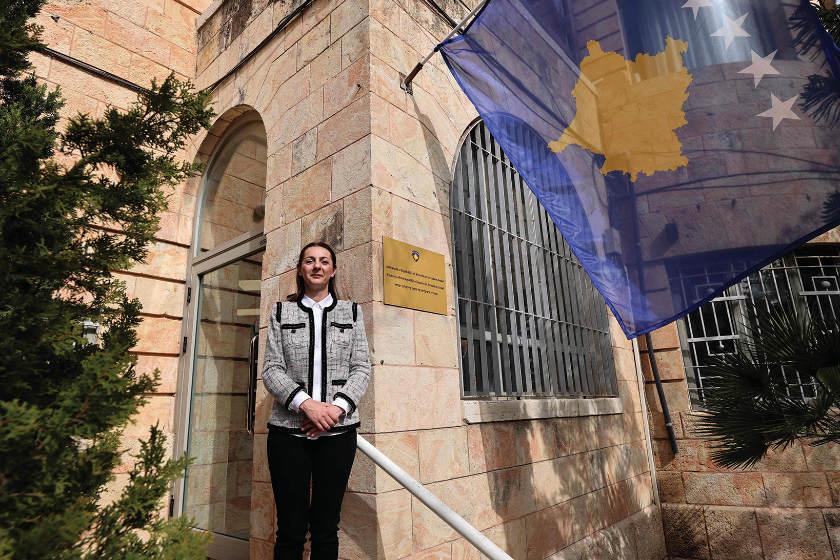
You look at Kosovo. Kosovo got a lot of support from Muslim countries at one point in its independence, and from others. They got support from Malaysia, for example, in a big way. They and the Bosnians. And it all disappeared. You want to be in with the Americans, you have to go and recognize Israel and go change your embassy. This is the pattern.
More recently, cleverer Israeli ambassadors have come along. Why did they come to the U.S.? Well, for a start, they’re often political rivals. The previous ambassador was someone who was a rival to [Prime Minister Binyamin] Netanyahu. By being in New York, you get access to this lobby. You get access to lots and lots of contributions for your own political career back in Israel. Which is what they did. You do this by taking [donors] to see the secretary-general. You take them to see the British ambassador. You take them to see the French ambassador. You take them all along to all these places. And you get a double vote, a plus, because the donors push other countries. You’re assuring the British and the French that, if you make trouble with us, you’re in trouble because we’ve got this huge influential sector of American society who is going to weigh in against you. They all want to be on the side of the winners in Washington. They’re all being nice.
We mentioned Boris Johnson before. Boris Johnson has disappeared up his own fundament, ripping up years of international law as expressed by Britain. Incidentally, Tony Blair began the process. Indeed we often forget that Margaret Thatcher stood for international law. In most cases, she actually voted along with the others on all the Palestinian resolutions against the United States, against dear Ronald [Reagan]. She voted against Israeli actions because that was international law. It took Tony Blair under the influence of Washington to go differently, which is where it’s going now.
So all these things have consequences. One of the things that we need to do is to look at how they do it. It’s a war of attrition on a thousand fronts all the way along. You really have to look for it.
I recently raised the issue—some of you saw in the newspapers that the oldest basket in the world was found in Israel. It wasn’t. It was found in the occupied territories. Why should I raise that? Where’s the Palestinian lobby? What is the Palestinian mission doing? Why don’t they say, “hey, that’s looting!” It’s only a basket, but it’s our basket. It’s a Palestinian basket. You can’t claim it is Israeli. It’s a war crime to steal cultural artifacts like this. There are not enough people watching this. The Israelis on the other hand, the first dereliction and you will get a host of letters. Your editors will get a host of letters.
In 1983 I did a tour of the West Bank and the occupied territories and wrote an article about it for The Guardian. It was a bit far out at the time and the editor was a bit dubious about taking it. Then the letters started coming in. It just so happened I knew the guy who did this. He was a Jewish friend of mine, a personal friend, not a political friend by any means. And he coordinated the response. All his lists got a postcard saying, “complain to The Guardian about the anti-Semitism in this article.” So they all duly put in the letters complaining about anti-Semitism, but they didn’t know what they were complaining about.
Because I said there were mosquitoes in Jerusalem one of them said I was clearly anti-Semitic. I mean this was what they were reduced to. But they were doing it. And editors don’t like getting complaints. They get emails now of course, none of this postcard and licking a stamp and putting it on. They’re continually on the lookout. And that is what the Palestinians are lacking.
We think that’s silly. Why would you complain about a basket in the West Bank? Well, you complain because every time that goes in, it’s this incremental war of attrition depriving the Palestinian claim of legitimacy. It’s at that level that it goes on at the U.N. as well. It’s underfunded, understaffed, and it’s constrained because [Palestinian President Mahmoud] Abbas wants everyone to make nice to the Americans and not to upset the Israelis too much.
It’s a Palestinian basket...It’s a war crime to steal cultural artifacts like this.
You really need an aggressive campaign. It’s far worse because of Palestine’s supporters for many years—I think Walter Hixson and others referred to this—the worst enemies of the Palestinians were their best friends. You really do not want—or didn’t want at the time—Syria and Iraq, and Venezuela under [President Nicolas] Maduro—some of the worst regimes in the world standing up and shouting about Palestinian rights because as we know they weren’t concerned about anybody’s rights. I mean what they know about human rights could be written on a thin edge of a postage stamp. And everybody else knew that, so it delegitimized it.
What we have to do at the United Nations is to work and get the Europeans and the Scandinavians. South Africa we brought on the side, and other countries with some credibility on these issues. But unfortunately they’ve gone by the wayside and the Israelis have been working on them as well. Israel has been toadying up to India, it’s been selling weapons to China. It’s using its state influence all the way.
Then it comes to the question, why is the U.N. important?
I noticed a question: What’s the effect of the International Criminal Court [ICC]? Well, the Israelis are very concerned about it. As it is, at the moment they know that every time one of their officials gets on the plane, they stand the risk of arrest when they get off at the other side, under universal jurisdiction. If an arrest warrant goes out into the ICC, they’ll go... It’s already happened. Israeli officials have landed in London, the British police came and tipped them off, warning if they get off the plane, there’s an arrest warrant for them.
So it’s a small incremental thing, but I do think it’s one of the unsung triumphs of the United Nations, that Israeli bureaucrats and military officers have to consult their lawyers as well their travel agents before they go anywhere. This is a good thing. It’s the type of harassment and delegitimization that the U.N. is doing. That has an effect, the same way it did with South Africa.
We did campaign about South Africa. I was expelled from a university over apartheid in South Africa, and there were quite a lot of us who paid a price for supporting South Africa. Some of us came into the support for the Palestinians when we saw the Israeli support for South Africa as well, which delegitimized our original sort of social democrat pro-Zionist inclinations. So it was there, we fought against it.
They’re still fighting it, but then you look at the examples. I think that Jeremy Corbyn’s big fault was not that he was anti-Semitic. But once he’d accepted the legitimacy of these accusations against some of his colleagues, he opened the dike. The torrent came rushing through. Corbyn’s a longstanding acquaintance of mine. He hasn’t got an anti-Semitic bone in his body, but that’s the weapon they used. The accusation is terrifying. It’s an internal accusation. It was like in 1984 where not believing in Big Brother sufficiently made you feel guilty because you were not going along with everybody else.
This is the real weapon of anti-Semitism at the United Nations and on an individual level. Well-thinking and well-meaning people are horrified at being thought anti-Semitic. After the Holocaust, we have every right to be horrified at the thought of such an accusation. But on the other hand, we have every right to turn around and rebut and refute those accusations when they clearly are nonsense.
When Ken Livingstone, the former mayor of London, was accused of anti-Semitism, Corbyn and his friends threw him under the bus. That meant that they were next, that the bus was coming back for them immediately afterwards, and it came back for them.
So part of it is the idea of standing up, like our colleagues mentioned earlier today. Having the courage to stand up and hold to your principles and getting enough people to do it. There is safety in numbers. If you can get more people to do it, if more editors actually defied the lobby. If they could actually get into their clubs and say, “look at this report, we should put it out. Netanyahu is a thug, we should say so and get everybody else to say so as well,” or “if I say it, will you say it?”
But those networks have to be built. It’s difficult. Part of this conference is an attempt to point out the ways and how to work together on an international level. We should be lobbying delegations at the U.N. We should be lobbying the Germans, the Dutch, the Scandinavians—all the ones who are wobbly. We should certainly be lobbying Canada. We should certainly be lobbying Australia because they got a free pass. They have both regressed in a shocking way under U.S. influence.
Canada has lost its Security Council seat. Most Canadians don’t know that Canada lost its Security Council seat because it had stopped supporting Palestine and was supporting the Israeli resolutions. The delegates out there were marking their cards. This is a secret ballot. They couldn’t hit back at the U.S., they couldn’t hit back at Israel, but they could hit back at Canada. And they did.
Australia has been getting the same treatment over the years. The UK is getting the same treatment for this, and for the Iraq war, of course. It lost several important positions that it used to take for granted on the International Criminal Court and others. But we have to encourage those delegates. You have to pull that apparatus. You have to get out there. Individuals have to take action, not just on ancient baskets in the West Bank, but on basket cases in various capitals around the world. We should go forth and remind them. There are embassies here and they do listen to what people say.
If we go lobbying to the British Embassy and say, “hey, we’ve seen you”; if you protest outside the British Embassy, it has an effect. If you picket outside the German Embassy and say, “you are an accomplice in war crimes by covering for Israel,” that hits home. The German press might even cover it, even though they’ve got their own problems. But we can’t let them get away with all of this.
USE THE UNITED NATIONS
The United Nations is a flawed instrument, but it is the only instrument we’ve got. As I often say, and I think I’ve said it in my UNtold book, it’s like democracy, it’s the worst possible and most inefficient thing in the world, but it’s better than the alternatives and the only one we’ve got so we have to work with it.
The U.N. is something that the Palestinians have been using in a very serious way. It was actually Yasser Arafat’s nephew, Nasser al-Qudwa, who started the long litigation road against Israel, which terrifies Tel Aviv. Their reaction to BDS is part of that. He pioneered resolution after resolution which stitched up Israel legally. Our previous speakers described a whole series of resolutions which were framed to say what Israel is doing, how it contravenes international law and international conventions, and why support of Israel is a contravention and a form of accomplice and conspiracy with Israel to defy international law. Al-Qudwa has done that but it’s up to the rest of us now to implement it. Because if you have a law that’s not implemented, you may as well not have it. In fact, it brings the law into dispute as well.
Unconditional U.S. support for Israel has continually degraded the stature of the United Nations and international law. Now Biden has shown several signs that he’s walked back, including restoring some funding for UNRWA. Some of the other more outrageous executive decisions have been walked back. What does he need to do? He needs to say very firmly that by international law the settlements are illegal and Israeli activities there are illegal and in violation of the Geneva Conventions. Let’s hear him say it. Then I’m convinced there might be a new era.
Up until then, it’s like a sumo wrestling match. The Israel lobby is bigger than us and is heaving us out the dohyō. So up until then I don’t think Joe Biden is really cut out to be a sumo wrestler, but who knows? He surprised me with several of his decisions so far. We’ve got some hope.
U.N. correspondent Ian Williams is the author of UNtold: the Real Story of the United Nations in Peace and War (available from Middle East Books and More). He writes the “United Nations Report” column in the Washington Report.















