







Washington Report on Middle East Affairs, August/September 2021, pp. 24-26
Special Report
By Dr. M. Reza Behnam
SURVIVAL IS A COMMON thread that runs through the experience of Black Americans and Palestinians. Although their experiences are distinct, the racist state systems that have destroyed their homes, property and communities are similar. The preoccupation with survival for both has made the struggle for liberation all the more exacting.
Wherever Black Americans prospered—Greenwood in Oklahoma, Rosewood in Florida, Forsyth County in Georgia, among others—white mobs and U.S. government policies made sure they “knew their place.”
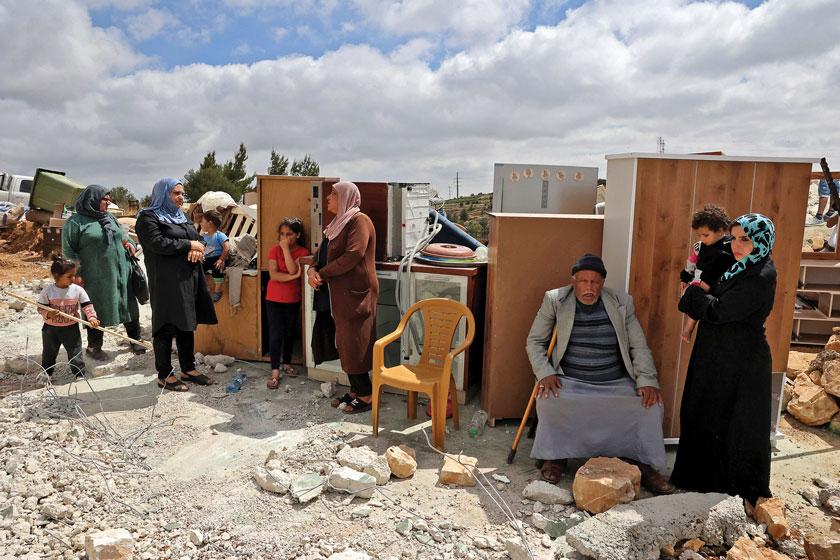
The demolition of Palestinian homes throughout the occupied territories is just one of many Israeli land policies meant to Judaize all of Palestine and to ensure that Palestinians are kept “in their place.”
The United States and Israel were built on the establishment of land and property rights over human rights. Because of this, both governments have treated Black Americans and Palestinians as security problems and demographic obstacles to development and expansion. Land seizure, forced removal and displacement policies were established to remove what they have described as “problematic” populations.
From 1950 through the 1960s, the U.S. government initiated “urban renewal” projects to contain what was viewed as their “Negro problem.” And since 1917, when the British government gave its approval for the creation of Israel in the heart of the Arab world, Israel has implemented policies to address what they term the “Arab problem.”
Under the guise of “urban renewal,” Black communities were demolished to fashion largely white cities and towns. And under the fig leaf of “reclaiming ancestral land,” Israel bulldozes Palestinian homes and property to make way for Zionist settlements. The destruction of both communities has been paid for with U.S. taxpayer dollars, including, ironically, the taxes paid by Black Americans.
State-sponsored segregation corralled Black Americans into mostly segregated, poorly resourced housing projects; while in Palestine, the apartheid policies of the Israeli government have forced Palestinians into ever-shrinking, tightly controlled, militarized enclaves.
An “internally colonized” people is how the Student Non-Violent Coordinating Committee (SNCC) described America’s Black population. The term in like manner depicts Palestinians who have been forced to live under the control of a foreign power in their own land.
Government planners often referred to urban renewal as “slum clearance.” James Baldwin, an influential American writer, more accurately described such projects as “Negro removal.”
Hundreds of Black neighborhoods were demolished in the name of urban renewal. It is estimated that from 300,000 to 1.2 million Americans—disproportionally Black—were displaced. Functioning Black communities were designated “blighted” and subsequently leveled. They were replaced by development projects such as universities, hospitals and civic centers that largely benefitted white populations. Construction of the interstate highway system, which often cut through predominantly Black neighborhoods, compounded the displacement impact of urban renewal.
Some of America’s significant structures are the legacy of urban renewal: the Lincoln Center in New York City; University of Pennsylvania; Lafayette Park; and Chrysler Freeway in Detroit.
America’s largest removal project occurred in the West End of Cincinnati in the heart of the Black community—25,737 people (97 percent Black American and low income) were forcefully removed. After razing more than 2,000 structures, the city sold the property to private developers and constructed Highway I-75.
Economic prosperity is tied to the ownership of land and property. Wealth, capital and land were transferred from Black ownership to private developers and business interests, denying Black Americans the opportunity to build wealth to pass on to future generations. Palestinians, too, have seen their wealth “transferred” to Israel through that government’s seizure and illegal occupation of Palestinian land and property.
In Israel, the state directly controls 93 percent of what was once Palestine. It is the Zionist state and its Jewish population who savor the wealth that is derived from “ownership” of Palestinian land.
However innocuous sounding, “urban renewal” in the United States and “ancestral land reclamation” in Israel, have destroyed more than property. The intent of both has been to sever kinship and community bonds, to rob generations of Black Americans and Palestinians of a sense of place and to rend the social, political and cultural connections that have filled both communities.
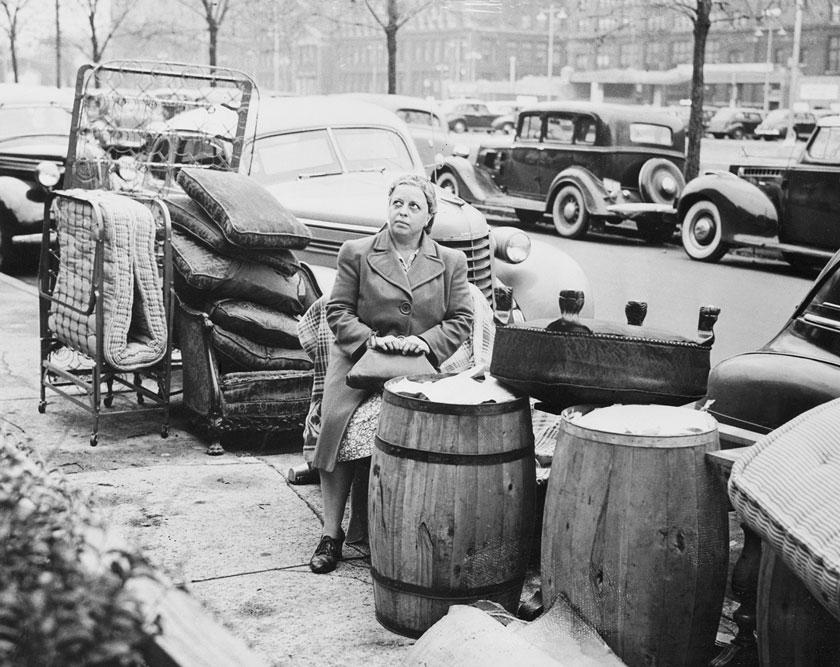
The extent and destructiveness of Israel’s demolition/removal plans are striking. The Israeli Committee Against House Demolitions estimates that from the beginning of the occupation in 1967 up to 2019, Israel has razed 49,532 Palestinian structures, displacing hundreds of thousands of Palestinians. Although Israel’s home demolitions are illegal under international law, the government uses them as a tool for territorial expansion.
Occupied East Jerusalem, Galilee and the Negev (the Naqab to Palestinians) are Israel’s most recent targets—labeled by state planners as “at risk” because of the high number of Palestinians living there.
The Zionist campaign to Judaize these areas began as early as 1948. In an April 1948 speech to the Zionist Action Committee, David Ben-Gurion, who would become Israel’s first prime minister, asserted that the 1948 war could be exploited to solve the supposed “Arab demographic problem.” He stated: “We will not be able to win the war if we do not, during the war, populate upper and lower, eastern and western Galilee, the Negev and Jerusalem area....”
Israel has used urban planning and an absentee property law to evict Palestinians and appropriate their land to transform East Jerusalem into a Jewish city since illegally occupying it in 1967. As of 2018, an estimated 218,000 Jewish settlers have moved into Palestinian neighborhoods in East Jerusalem. From 1967 to 2020, Israel demolished 5,350 Palestinian homes in the city.
For years, Israel has been expanding illegal settlements in the Silwan neighborhood of East Jerusalem with the goal of driving Palestinians out. More than 100 buildings, housing 1,500 people, in the al-Bustan neighborhood of Silwan are currently facing demolition to make way for a biblical tourist park, which Israel intends to build in the heart of Silwan. Families are given the ultimatum to either demolish their own homes or face paying the demolition costs, estimated at $6,000.
Just as highway building projects separated and segregated Black communities in the United States, Israel’s construction of the separation wall in 2002 has partitioned Palestinians from each other. In East Jerusalem, the wall cuts through previously contiguous Palestinian neighborhoods, and in some cases, divides them completely. The concrete barrier fully seals Palestinian East Jerusalem off from the rest of the West Bank, severing connections with family and destroying the social fabric of communities.
Israel’s bulldozing policy is not new. One of its most grievous demolitions took place in the Mughrabi Quarter of East Jerusalem’s Old City on June 10, 1967. Some of the buildings destroyed in the old Moroccan neighborhood were more than seven centuries old. Israeli bulldozers leveled Arab neighborhoods to make way for an expanded plaza for Jewish worshippers. The mass demolition left 132 families homeless.
Although citizens of Israel, Palestinian Bedouin in the Naqab are among its most vulnerable communities. Under the guise of developing the Naqab, Israel has razed thousands of Bedouin homes and structures.
The Negev Coexistence Forum for Civil Equality (NCF) found that in a period of six years, Israel leveled 11,518 structures in Bedouin villages. Additionally, the NCF determined that in 2020 alone, 2,586 buildings were razed and that the number continues to grow each year. Thousands of Palestinian Bedouin families are currently facing forced removal to make way for a major new highway in the region.
To pressure them into giving up their land, Israel denies Bedouin villages access to basic infrastructure. The plan is to make life so unbearable that the Bedouin will succumb to what is essentially forced removal to seven existing government-planned townships. Bedouin who relocate to the townships are first required to surrender their ancestral land claims.
Like the housing projects created as an extension of urban renewal in the United States, Israel’s townships are among the poorest communities in the country, with minimal infrastructure, high crime rates and few job opportunities.
The Galilee, most of which came under Israeli control after 1948, is prized because of its fertile soil and because the Sea of Galilee is the primary source of fresh water for Palestine/Israel. Israel’s goal of Judaizing the entire Galilee, outlined in its 1948 “Plan Dalet,” continues to this day. The plan called for the removal of the Palestinian population and destruction of their towns, while geographically uniting Jewish settlements scattered throughout Galilee.
Israel uses extensive methods to impose its demographic footprint, including declaring military zones, moving military factories and Jewish employees into Galilee and building roads and airports to support industrial development on seized land.
The U.S. government has it in its power to dismantle the forces of oppression that have formed America and Israel. It has chosen, instead, to remain silent, even as Israeli mobs attacked Palestinians and chanted, “death to Arabs, lynch the Arabs,” during recent skirmishes in East Jerusalem. America’s uncritical support has enabled Israel to intensify its racist practices. Israel has merely to look at the damaging effects racism has had on the United States to see its future.
Dr. M. Reza Behnam is a political scientist specializing in the history, politics and governments of the Middle East.