Israel Breaks Gaza Ceasefire
In a move backed by President Donald Trump, Prime Minister Binyamin Netanyahu authorized airstrikes that ended the ceasefire and killed hundreds of Palestinians across the Gaza Strip on March 18, 2025.
Washington Report on Middle East Affairs, May 2025, pp. 21-23
Daily Life and Shattered Dreams in Gaza—Writers Share Their Stories
By Sahar Al-ijla
FOR THE FIRST NINE months of the war, my eight-member family wasn’t able to get any news about our home. We had no idea whether the Israeli army had destroyed it like it had so many other houses in the dangerous eastern area of Gaza, close to the Israeli border. In June 2024, after the army withdrew from the area, a friend was able to reach the house and told us it had been partially destroyed and robbed but was still standing. We were happy to hear that we had at least a room to go back to.
However, that joy didn’t last long because the Israeli forces bombed the whole neighborhood in July, turning our house completely to rubble. We didn’t complain; we accepted our destiny because we believe that Allah will make it up to us and indemnify us with better things.
Despite our sureness that nothing was left of our house–we had seen pictures of the rubble—we had an urgent and renewed longing for it. We badly missed it and the life we had lived in it. So after the ceasefire was announced, we couldn’t fight the desire to return home and visit the remains.
My three brothers walked from the south to the north of Gaza—about 18 kilometers or 11 miles—while my parents, sister, youngest brother and I waited in the car line for about six hours to enter Gaza City.
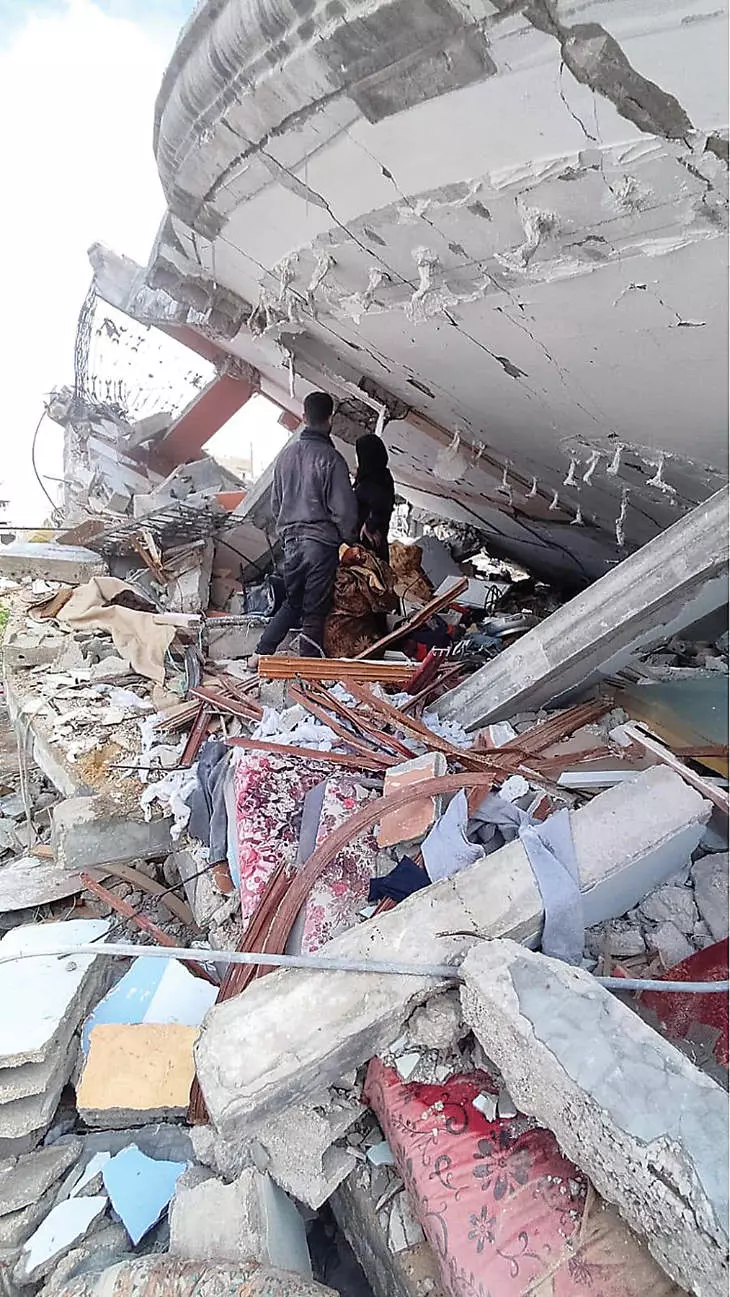
When we were at last able to drive into the city, it was difficult to reach our house due to the rubble and destruction along the way. But we finally made it. At first it took me a while to recognize the remains of my house. But once I did, even though it was only a pile of scattered rocks with no clear features, I couldn’t prevent my shivering lips from saying “Home sweet home!” My heart ached at the monstrous view of my beloved home. My parents, sister and brothers gazed speechless with pale and heartbroken faces. We stood that way, moving our tearful eyes between the house and one another, watching each other’s reactions as if we were waiting for unspoken support.
I could see the signs of shock and sadness on their faces, especially my parents, but they kept repeating, Alhamdulillah. My tears were uncontrollable. I sobbed for a while as I walked around and touched every spot and recalled the moments I had spent in those spots and corners.
We were exhausted and needed a place to rest and sleep after the hours of walking, but once we absorbed the shock, we rushed into the rubble. We headed to the tiny spaces and holes between the rocks and extracted everything our eyes could recognize and our hands could reach. We were digging and searching for any of our lost personal belongings and hoping to find them in one piece. It was as if we were looking for our old lives and memories. We searched with our bare hands despite the danger that the rubble and damaged structures could collapse on us.
Each family member participated in the searching process. We stood in the tiny, less than 1-meter-high (3-feet) spot between the damaged ceiling and the floor and moved the rocks, iron and anything that was in the way.
We were looking for personal belongings, such as clothes. But we also looked for different things, according to our individual interests. My mother looked for her favorite kitchen tools and supplies; my father searched for the formal documents of the house and other important papers and electrical devices; and my brothers, Mahmoud, Mohammad and Mo’men, were looking for anything from their room. My sister Shahd, who is still in high school, tried to find her books and the calculator she needs for her studies; my youngest brother Ahmed wanted his school bag, bicycle and toys. I was looking for my favorite hijabs, makeup, and my college books and papers. To be honest, I was looking for everything I ever had.
Whenever one of us found an item between the rubble, we were shocked and pleased as if it was the first time we had seen it in our life; we were also proud and amazed that these things had survived the relentless bombing.
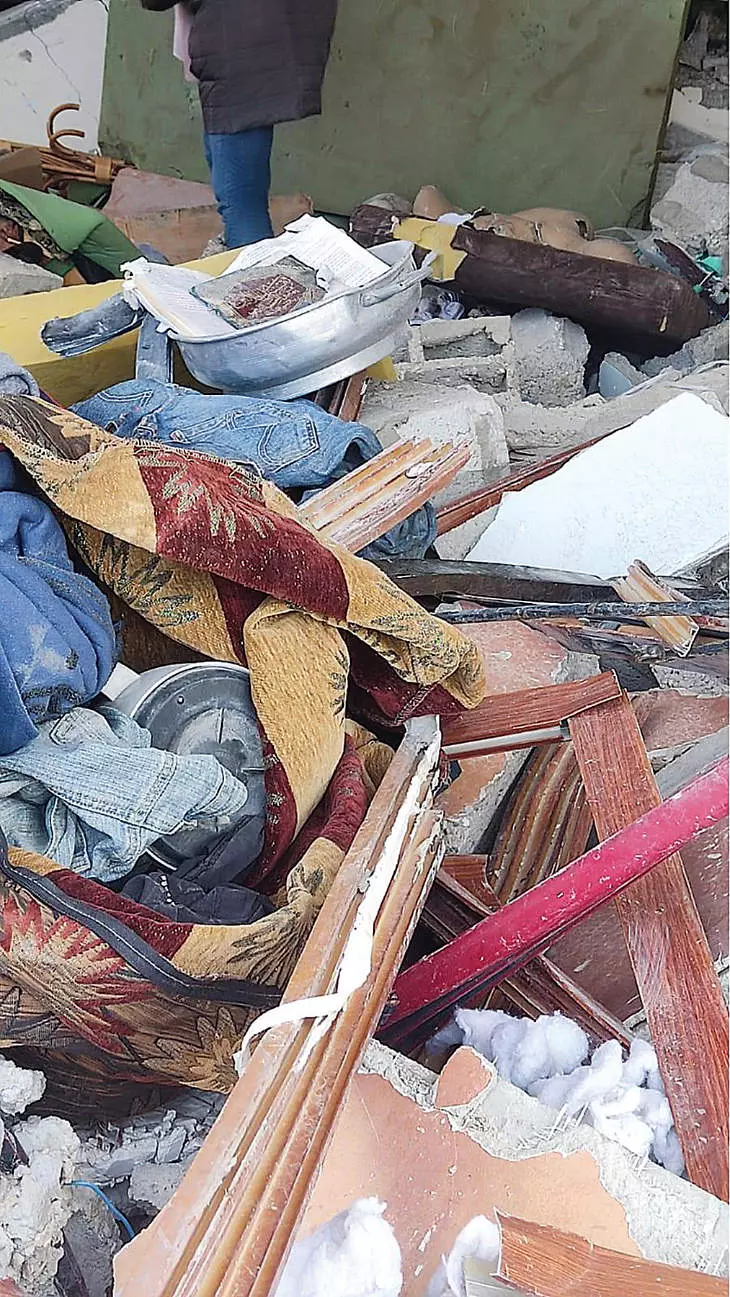
My mother found only two trays, a strainer, a hijab, and her favorite holy Qur’an. The Qur’an was torn, but she was very happy to find it and the other items. Meanwhile, my father found some of his shirts, now tattered; he wanted to keep them, he said, because they remind him of the good old days. My sister, Shahd, was lucky to find the calculator she needed and a single book.
My brothers managed to pull out the damaged and completely broken fridge, freezer, TV screen and all the furniture we had. They decided to use the broken furniture to make a fire for cooking and to try to get warm. They also used some of the wood to build a tent next to the rubble. Ahmed, who is 10 years old, ironically found the SpongeBob doll he’d hated the most among all his toys; it has become precious to him now and he gifted it to my nephew to play with. When Ahmed saw his ruined clothes, and everything else that was destroyed, he asked: “Why did they do this to our home when we didn't do anything wrong?”
I was thrilled to find the old, worn-out hijab I used to wear before the war, in addition to a shoe. I was astonished to find my favorite lipstick intact, but I was upset to find my aloe vera tree, which I had planted and watered, dead.
The things we found and now hold on to were completely different from what we expected. For other people they might seem silly and worthless, but for us, they mean the world. They are part of our lives, our memories of happier moments. They remind us what our lives were like when we had peace of mind.
Sahar Al-ijla is a 26-year-old from Gaza, Palestine, known for her unique, joyful, hard-working, ambitious and sensitive nature. She channels her emotions into writing, doing so frequently and always in English, the language she studied. She is training with We Are Not Numbers (WANN), a project to amplify the voices of young Palestinian writers.