















Washington Report on Middle East Affairs, October 2026, pp. 8-10
Daily Life and Shattered Dreams in Gaza—Writers Share Their Stories
By Refaat Ibrahim
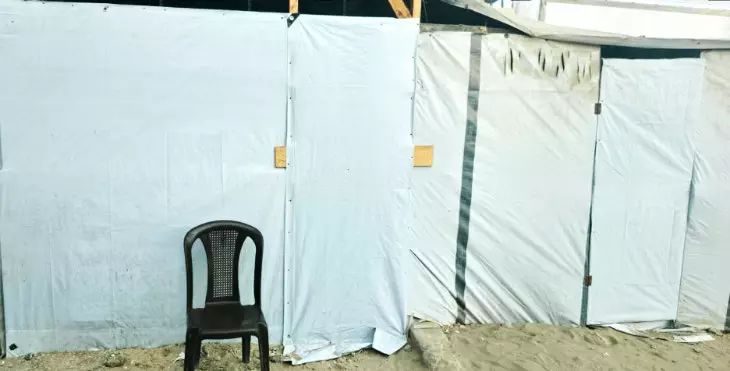
IN THE BEGINNING of July 2024, I was sitting in my dilapidated chair in front of my newly erected tent, my 11th displacement since Israel launched a genocidal war on Gaza in October 2023. I was holding my phone and trying to pick up an Internet signal, while simultaneously writing my first article, which was published later that month by the Washington Report on Middle East Affairs.
I did not know at the time that this moment would become the beginning of a career during which my life would completely change.
This is not just a story about journalists facing danger while covering war. It’s about a price that doesn’t show up in the published material, the images, or the views and engagement numbers. The price of working amidst fear, loss of loved ones, displacement, hunger, anxiety for the family, and then returning to the computer to try to produce journalistic material that appears to the reader as if it had been written under normal circumstances.
The harshest thing I experienced during this journey was documenting the story of my friends Muhammad and Mahmoud, two brothers who were killed by Israel during the genocide. I went to interview their mother. I knew one of her sons particularly well, and I used to go to their house to see them. This time, I sat in front of their mother to hear her talk about her two martyred sons.
I had to appear coherent and hide my sadness so I could ask questions and record her testimony. It was like a nightmare; sitting with someone I knew well, but not with the friends I used to come for. Instead, I listened to their mother speak with a stuttering tongue choked with tears.
She handed me their clothes in a small bag. “This is yours,” she said to me through her tears. “Remember them by it.”
She looked at the clothes and then looked at me, as if she was handing me a heavy trust.
I couldn’t say a word after that. I finished the interview and went back to my tent crying the whole way. That night I couldn’t sleep. I kept thinking about her words and the clothes she put in my hands.
I spent months afterward unable to comprehend that the brothers I knew and loved were gone. I was trying to find a way to express my sadness or write something about it, but I couldn’t. I thought about asking another journalist to write their story, but I didn’t dare. I felt it was impossible for anyone else to write about Muhammad and Mahmoud as I knew them.
It took me a whole month before I could complete the story, which was published in October 2024 on the We Are Not Numbers website.
NOT A TYPICAL WORKING ENVIRONMENT
What happened to me was not a unique experience.
Palestinian journalists in Gaza work within an environment that does not resemble the traditional journalistic work environment. While media organizations deal with deadlines and scoops, the journalist in Gaza doesn’t know whether the next bombing will approach their home, or whether a family member will be among the casualties they will have to report on.
With every bombing or ambulance siren, a journalist may momentarily stop their work. Was the targeting close to my family? Was my father or mother injured? Is the person being transported by ambulance someone I know? Will the next news be about someone I love?
These questions are not written into employment contracts, nor do they appear in job interviews, but they are part of the daily cost of journalistic work in Gaza.
According to the Palestinian Journalists Syndicate, Israel has killed 265 Palestinian journalists since the beginning of the genocide in October 2023. But this number, despite its magnitude, does not tell us about the hundreds of journalists who were injured, lost their homes and relatives, or were forced to continue working in life-threatening conditions. Behind the casualty figures are hundreds of stories of journalists continuing to work while living the same conditions they are trying to document.
But the danger does not end when the journalist leaves the scene; sometimes the harshest part starts after you get back to the computer.
When a journalist hears the testimony of someone who has been lost or injured, they must maintain coherence during the interview and later return to the recording and listen to it again, perhaps many times, until they choose the appropriate phrases, edit the material, write the text, or produce the video.
I experienced this while preparing material about young men who had recently married or were preparing to get married before Israel killed them.
The final material was short, but it took me about a month of work. I repeatedly listened to testimonies from victims’ families, watched photos and videos, and rearranged parts of the interviews.
I was listening to women who got married just days or weeks before I interviewed them and then lost their husbands. I was watching wedding clothes, gifts, pictures and promises of a married life that had never even begun. It was hard to watch this material once, let alone go back dozens of times to edit it.
After about an hour of working on the material, I found myself unable to continue; I had to stop and sleep for hours. This was repeated throughout the video’s preparation, until I was finally able to finish it.
LIVING (AND RELIVING) THE STORY
Other journalists report similar experiences.
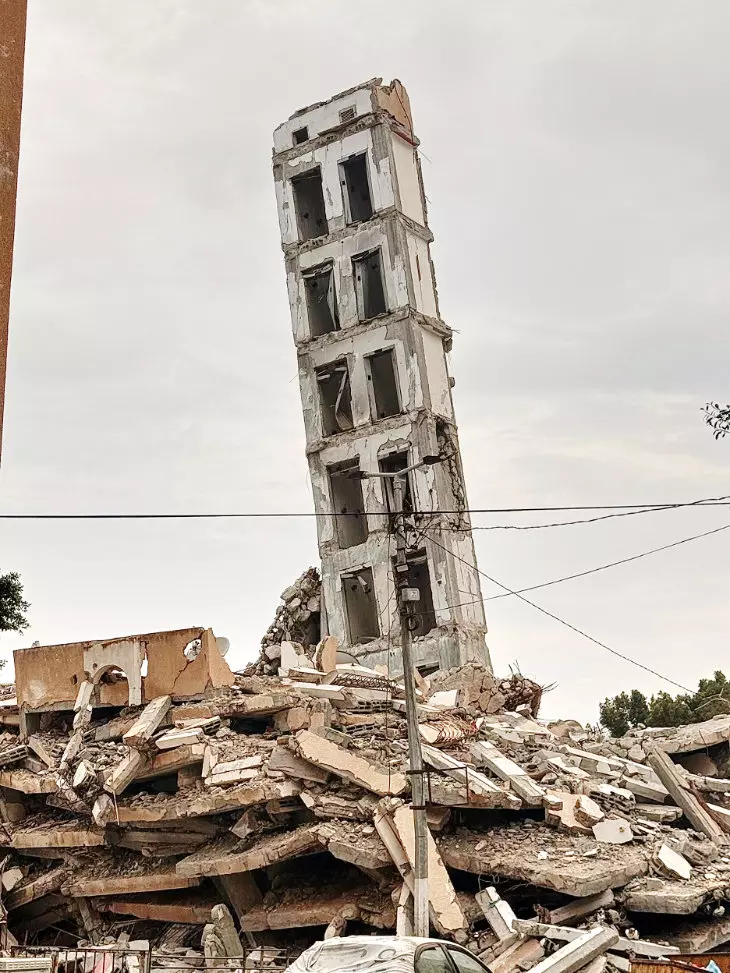
On Sept. 17, 2025, journalist Eman Abu Zayed was finishing up an article later published in Le Monde newspaper titled “Depriving Gaza’s children of education means depriving society of its future.” At 1 a.m., evacuation orders were issued for the tower where Eman and her family lived. She had to leave their house and spend an entire night on the road without shelter.
The next day she returned to find their apartment destroyed, and she had to find a safe place for her family. However, on the same day she had to travel a long distance searching for an Internet connection to continue her work and make the required adjustments to her report, while the raids were continuing.
These experiences reveal a cruel paradox: a journalist who is asked to document the lives of others is at the same time experiencing the same danger that they document.
Eman herself faced this dilemma while interviewing a 10-year-old girl who suffered an injury that led to the amputation of her hand. During the interview and later during the editing of the material, Eman found herself reliving an injury she sustained earlier, imagining how she would have coped had she been a child.
And this is one of the most difficult aspects of journalistic work in Gaza: a journalist cannot always separate what they see from what they have experienced.
The material is sent by the deadline, it is published, engagement numbers start to rise and the story is praised. The institution sees the story, but the journalist lives the conditions of its production: spending long hours on the street or in a public place searching for the Internet, then returning late to their tent.
Palestinian journalists do not work from a position that is neutral about the events they cover. They live inside it. However, they continue to work because they see documenting what happens as a moral duty and because there are stories that may disappear if no one writes them.
They work despite fear, loss, their families in distress, tired bodies and minds that can’t always handle everything they see.
In early July 2024, I was sitting in front of my dilapidated tent, trying to pick up an Internet signal to write my first article. Today, after two years, 80 articles and thousands of social media posts, I am still writing.
But I now know that every material that reaches the reader sometimes carries behind it another unpublished story: the story of the journalist who wrote it, the time they lost, the fear they hid, the people they lost and the hunger they experienced in their tent.
When computer programs count the number of views of and interactions with our work, we return to our dark tents, trying to share what little food we have with our families.
One question remains that no employment contract can answer: How many more pieces of our souls will be burned tomorrow to convince this world that we are not just numbers.
Refaat Ibrahim is a Palestinian writer and journalist from Gaza. He holds a degree in English Language and Literature from the Islamic University and writes about political, social and cultural issues in Palestine. Through his work with We Are Not Numbers, he amplifies Palestinian voices living under occupation, believing that writing is a bridge between truth and people’s hearts and minds. His mentor was Charles Ellenbogen.















