






Washington Report on Middle East Affairs, October 2025, pp. 12-14
Daily Life and Shattered Dreams in Gaza—Writers Share Their Stories
By Reem Salim
MY FAMILY SOLD the last thing that connects us to our homeland—our house and all our furniture. We have nothing left in Gaza. Not because we don’t want to return, but because life’s circumstances forced us to let go so we could survive in exile. My room, my bed, my closet, my desk, my books and pens…all of it went to another family whose home was bombed.
We came to Egypt fleeing death, but suffering continued to chase us. We thought we would return after a short time, that the war wouldn’t last long, so we brought only a few clothes and essential documents.
We had no idea what challenges we would face. We never expected to remain stranded indefinitely or to be subjected to yet another form of siege—this time through Egyptian government procedures that forced us to pay thousands of dollars to enter the country without being granted any rights.
My story is not unique. Today, more than 100,000 Gazans in Egypt are trapped in limbo.
They cannot return home, nor can they move forward and start a new life here.
A June 29, 2024, article in the Washington Post described the legal void in which displaced Palestinians from Gaza live in Egypt, where they face precarious legal conditions and receive neither protection nor refugee status.
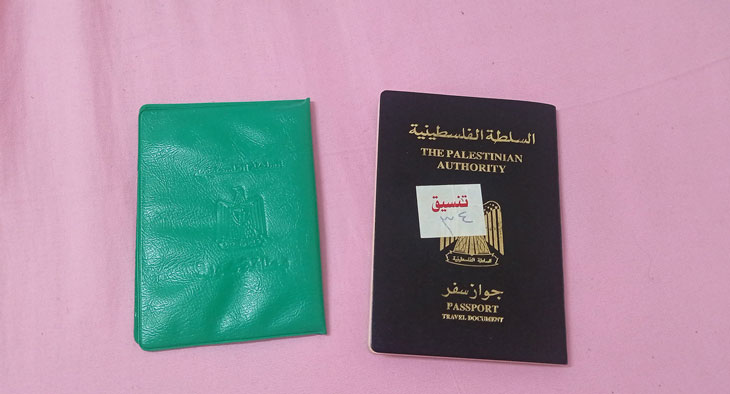
Our lives are practically on hold. Even simple things, like buying an Egyptian SIM card or arranging travel inside or outside Egypt, are restricted for Palestinians.
We are not allowed to obtain official residency documents, so we cannot enroll our children in public schools, apply for jobs, or access healthcare in government hospitals, to mention just a few basic needs.
We are not treated as refugees, so we don’t receive humanitarian aid or exemptions, nor are we treated as citizens with full rights. We are unwelcome guests in this land, constantly under threat of being deported to Gaza—a place that is no longer livable.
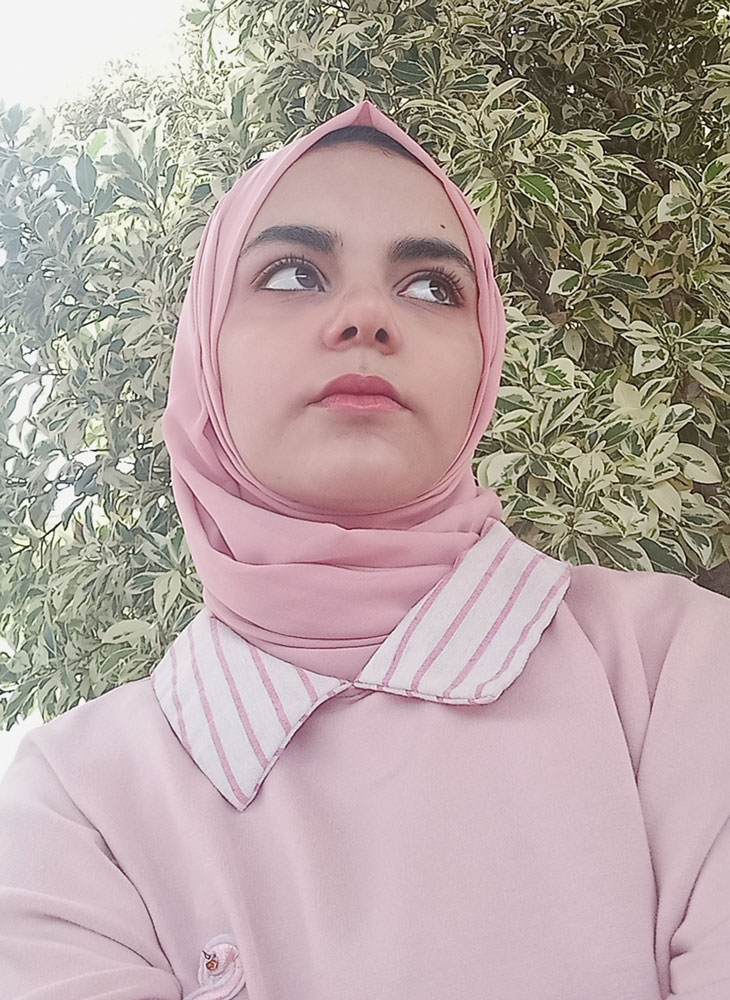
It’s as if we are invisible. If we speak up, we’re told we’re lucky. If we ask for help, we’re silenced—or worse, threatened with deportation. But where would we go?
We sold our home, not to buy another, but simply to afford food. Is there anything worse than letting go of the place that provided safety and shelter—and family memories since childhood—just so you can survive? Just to rent a place in a country that might opt to deport you?
Before the war, we lived in comfort. My father had a stable job with the Gaza municipality. Every week, we dined at the finest restaurants. We wore beautiful clothes. We had an exquisitely furnished home and a little cat that played around it. We used to invite our relatives to celebrate birthdays and special occasions.
But now, my father has lost his livelihood. The municipality where he worked was bombed, leaving him with no source of income. He hasn’t been able to find work in Egypt, and he knew from the start that it would be nearly impossible—first because of his age (he is in his 50s), and second due to the restrictions placed on Palestinians. The only viable way to earn a living here is through investment and launching large-scale projects—something entirely out of reach for those of us who fled death with nothing.
We have reached rock bottom.
Some people might think we’re living in paradise here. Maybe it felt that way for the first few days after arriving in Egypt. For the first time in months, we had electricity, food, water and freedom. But as time passed and the war continued, and as we remained trapped and stripped of our freedoms, it began to feel like a prison.
Most of us have run out of money and can no longer afford the high cost of living here.
Because of these challenges, it feels like the only difference between us and those still in Gaza is the absence of rockets.
But that doesn’t mean we’re safe. Many crimes and kidnappings are happening around us, and even if we escape those, we still face theft and scams—especially once our Palestinian identity is exposed.
For example, one of my father’s friends rented an apartment, only for the landlord to force him to pay three times the original price, just because he wasn’t a citizen.
My friend Doaa took the risk of traveling to Egypt alone to pursue her dream of completing high school. She lost her entire family in the bombings. Now, she faces a different challenge: her landlord is threatening to evict her because she can’t pay the rent and she can’t find work.
She told me, “I applied for jobs at several companies, but they all rejected me because of my nationality. I have nowhere else to go now that my family is gone. I wish I had died with them instead of coming here.”
My mother’s friend, Maysoon, is ill and needs stomach surgery. She went to a public hospital hoping to receive treatment, but they asked her for proof of residency—something the government refused to provide to her—so she was denied care. Her only option is a private hospital, but she can’t afford it, especially after being stuck here for nearly two years without any source of income.
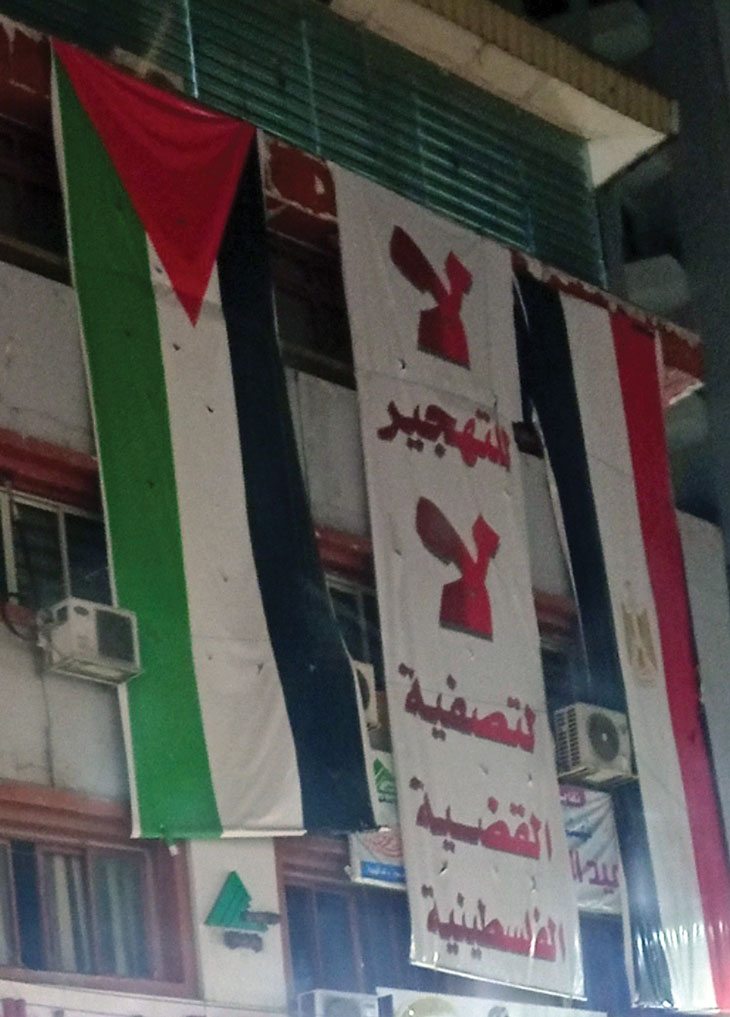
Sometimes, I wonder with a heavy heart: Do my books still breathe? Did someone read them and notice my notes, or were they burned like my hopes? What about my cat? Is she still alive amid famine and destruction, or is she dying beneath the rubble? My father’s job? Doaa’s dreams? Maysoon’s health?
And what if the war ends? Will we be forced to return? And where would we go when we no longer have a home?
We’re not asking for privileges or luxuries—we just want our voices to be heard, our existence to be acknowledged, and not to be forced to surrender the last of our dignity just to survive.
The war took everything from us, and in exile we face an uncertain future. How long will we remain invisible? And how long will the world keep watching in silence?
Reem Salim, an English literature student at Al-Azhar University, was displaced to Egypt early in the war. She is training with We Are Not Numbers, a project to amplify the voices of young Palestinian writers.