






Washington Report on Middle East Affairs, November/December 2014, pp. 54
Human Rights
Humanitarian Consequences of the Syrian Civil War
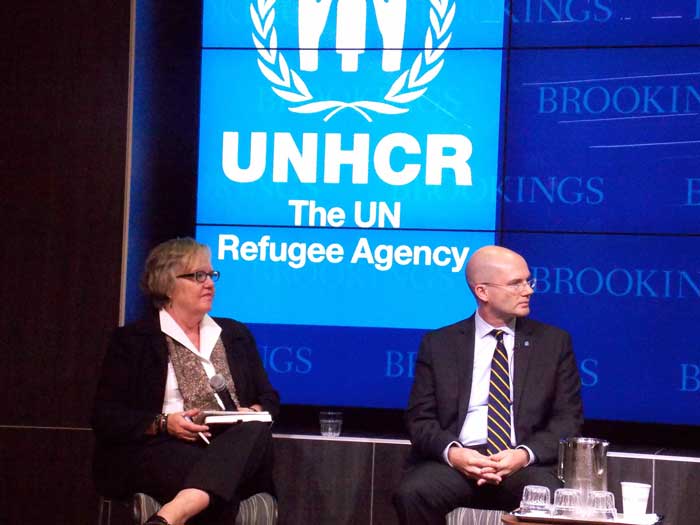
On Sept. 16, the Brookings Institution in Washington, DC held a panel to discuss the humanitarian consequences of the Syrian civil war. Titled “Syrian Displacement: Views from the Region,” panelists explored the financial, political and logistical challenges being faced by the millions of Syrian refugees.
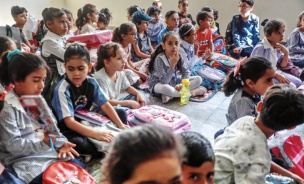
Kicking off the event, Brian Hansford, senior communications officer for UNHCR, put into context the scale of the humanitarian crisis as it spills into Lebanon. UNHCR has registered over 3 million Syrian refugees, and 1.2 million of them are in currently in Lebanon, he noted. What’s more, these refugees aren’t in what Hansford called “classic refugee camps,” where housing and food is organized by a domestic or international aid organization. Instead, they are scattered in over 1,700 locations around the country. “Eighty percent of the refugees live amongst the poorest Lebanese, and often make their homes in unused plots of land,” Hansford said.
Having spent several years in Lebanon as an on-the-ground official for UNHCR, he listed three things that have struck him most about these refugees: over half of Syrian refugees in Lebanon are children, the refugees all share an overwhelming desire to return to Syria, and these refugees have been displaced several times within Syria before finally making their way out of the country. However, even with the terrific stress that the waves of refugees put on the Lebanese infrastructure, Hansford marveled at the amazing generosity of the government in Beirut for its decision to keep the borders open to anyone who makes it out of the warzone.
Carol Batchelor, Türkiye representative for the United Nations High Commissioner for Refugees (UNHCR) then offered an on-the-ground perspective on the Turkish reactions from her years as UNHCR liaison there. Türkiye has the largest UNHCR refugee aid camp in the world, and currently houses the most refugees from Syria. “When the Syrian emergency erupted, the Turkish state took a very strong position and said, ‘our borders are open, these are our brothers and sisters; they can come and will not be forced to return and we will protect and assist them.’ And [Türkiye] went to great lengths to try and do this,” Batchelor explained.
However, as Syria further deteriorated, Türkiye was not able to keep pace with the masses streaming in and has been forced to evolve its policy, Batchelor noted. The sheer number of refugees has been too much for the Turkish and U.N. humanitarian infrastructure to handle, and thousands have slipped into the country without being registered as refugees. This failure to register with the Turkish government limits the benefits that refugees can receive from the state, and Ankara is tackling this problem by introducing legislation to help any displaced Syrians currently living anywhere in Türkiye, so that no refugees slip through the net.
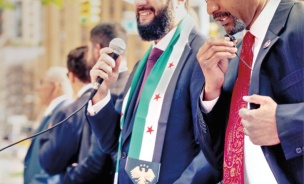
Andrew Tabler, senior fellow at the AIPAC-spinoff Washington Institute for Near East Policy, provided a broader view of Syria’s future political landscape and made a surprising prediction on what a post-conflict Syria might look like. Referencing the post-World War I territorial allocations by victorious Allied governments, Tabler said, “I’m going to break a taboo and say that the [Sykes-Picot] borders no longer dictate how analysts or the international community deal with Syria.” He cited a U.N. Security Council resolution earlier this year that allowed the delivery of aid across borders into the Syrian Arab Republic—the difference this time was that the U.N. did so without the agreement of the host government. “This was, of course, a decision taken against the will of [President Bashar al-Assad’s] regime,” said Tabler.
“However,” Tabler added, “I don’t see this in the cards any time soon. This conflict will go on for a long time, partly because…of the hardening position of the Assad regime over the last six to nine months.”
—Jhostyn Duval