






An Evening with Dr. Bassem Youssef & Rula Jebreal

Fans of “The Daily Show” with Jon Stewart may recall when Dr. Bassem Youssef, an Egyptian cardiac surgeon, was the featured guest.
During the Egyptian revolution, Youssef began putting out five-minute episodes on YouTube of political satire modeled on “The Daily Show.”
They received so many hits that he made it to TV with a show called “Al-Bernameg” (The Program). In 2012, the program’s second season, it became the first live show with a studio audience in Egypt and Youssef became known as the Egyptian Jon Stewart.
The Mohamed Morsi government issued Youssef an arrest warrant for insulting the president, but with the June 2013 counterrevolution, Morsi ended up in prison, General Abdel Fattah el-Sisi seized power, and “Al-Bernameg” was taken off the air after one show. Five months later, the Committee to Protect Journalists awarded the International Press Freedom Award to Youssef. In 2014 “Al-Bernameg” aired on a satellite channel, but after 11 shows, the Sisi government banned the program. Youssef announced that the political climate was too dangerous to continue “Al-Bernameg” by other means. He left Egypt and moved to California via Dubai.
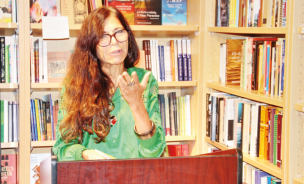
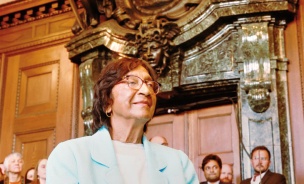
On February 8, Dr. Youssef was the opening keynote speaker for the fifth annual New York Live Ideas Festival. He was joined by journalist Rula Jebreal, whose autobiographical novel Miral was made into a film in 2010. [Jebreal is scheduled to be a keynote speaker at the “Israel’s Influence” conference on March 18, co-sponsored by the Washington Report.] Choreographer Bill T. Jones, artistic director of the festival, introduced them both at CUNY’s Graduate Center.
The Arab Spring began in Tunisia, but quickly spread to Egypt because, Youssef quipped, “we were jealous” and “became the drama queens of the 24-hour news cycle.” Egyptian state media called the demonstrators traitors, paid operators, and spies in a vast conspiracy led by Hamas, Israel, the U.S. etc. This was when Youssef began filming political satire in his garage as a way to counter such “Fox News” style of reporting. The offer for a television show came just as the U.S. granted him a visa to attend a cardiac course in Cleveland. He chose the “empty life of fame and money.”
Youssef’s show came under pressure from Morsi and then worse from el-Sisi. Youssef reported that thugs put the theater under siege and “laughing became a luxury.” Whether theocratic or military, he continued, dictators have no sense of humor. Their not-so-secret weapon is fear. The best antidote is sarcasm, which comes from the Greek, meaning “to dissect.” Thus, Youssef added, he didn’t stray too far from medicine, plus “the joke is mightier than the sword.”
Jebreal, having worked as a journalist in Italy and now living in the U.S., noted that the West views the Middle East through the lens of Israel, oil, stability, tyrants and terrorism. This seemed to broaden slightly with the Arab Spring, but “five years later it’s back to tyranny. What went wrong?” Youssef responded that although many see the Arab Spring as an unnecessary disaster and things might now look hopeless, the majority of young Egyptians “cannot again be taken in by propaganda. They are questioning everything.” That it did not work does not mean it has failed forever.
The demonstrators, Youssef continued, were inexperienced and fragmented and were up against very established powers—60 years of dictators who tell the people the only alternatives are scary. “It’s either me or chaos.” Add to that money and politics empowering the dark side, like ISIS. “Imagine the KKK with petro dollars.” When religion gets together with the military, Youssef concluded, the first people crushed are liberals. “A third way will evolve when religious and nationalistic fanaticism no longer work.”
—Jane Adas