















Music & Arts
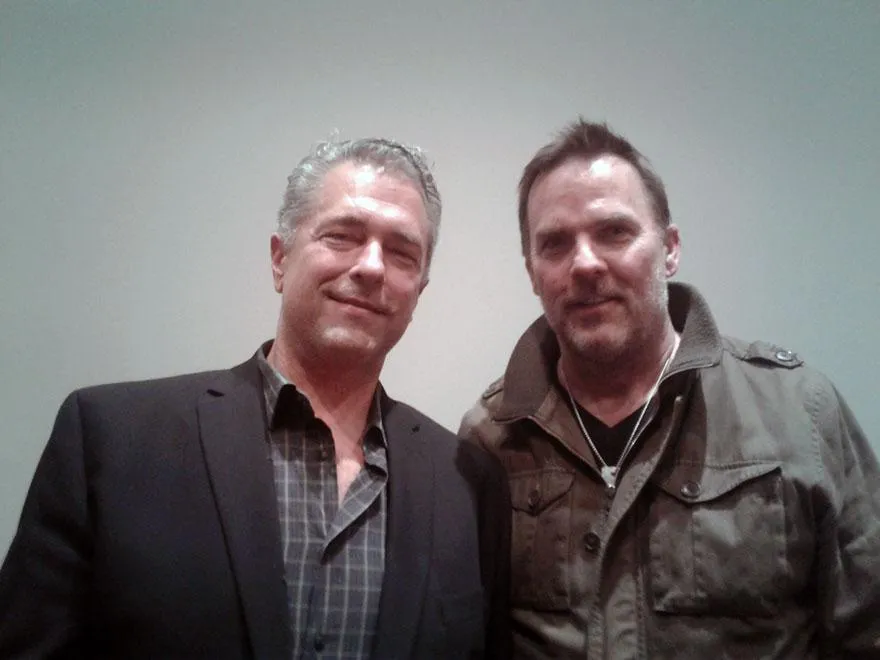
Malek Akkad and Michael Nash’s feature-length documentary “Not Without Nerve” is about the experiences of Akkad’s father, Moustapha Akkad, while making his landmark 1976 film “The Message,” which chronicles the life and times of the Prophet Muhammad. Both films were screened at the University of Southern California Cinematic Arts on Feb. 21 and 22.
The new documentary tells us about the difficulties faced by the late international filmmaker before, during and after making “The Message.” Akkad almost gave up making his film, originally known as “Mohammad, Messenger of God,” until King Hassan II of Morocco invited him to start filming there. Later the king, without explanation, asked him to stop filming and leave the country. While he was wrapping up his operation in Morocco, Akkad pushed his crew to do more filming of the ka’bah [the most sacred site in Islam, located in Mecca], because he knew it would be difficult to create another ka’bah in a different Arab country. Soon Muslims began protesting Morocco’s ka’bah, arguing there should only be the original ka’bah in Saudi Arabia.
Akkad received another invitation, this one from Col. Muammar Qaddafi, to finish the film in Libya. Akkad went there immediately and set up his studio in a small town in the Libyan desert and finished filming. The actors took turns doing the English and Arabic versions of each scene. Anthony Quinn played Hamza, the prophet’s uncle, in the English version.
Akkad never showed Prophet Muhammad’s face in the film in accordance with Islamic tradition, which generally forbids any direct representation of religious figures. So he was shocked to see a protest at the 1977 opening night in Washington, DC. A splinter group of the Nation of Islam staged a siege of the Washington, DC chapter of B’nai B’rith under the mistaken belief that Anthony Quinn played Muhammad in the film. The standoff was resolved only after the deaths of a journalist and a policeman. The movie was banned in many Arab countries for a long time, but today nearly every Saudi household owns a copy of the film.
“My father was fearless and wanted to make the movie his own way,” said Malek Akkad. “He asked the Arab leaders to give him 2 percent of their budgets to make movies about the Arabs and Muslims.”
“Moustapha Akkad wanted to bridge the East and West through movies,” added Michael Nash.
Malek Akkad concluded the evening by saying: “Our purpose in making this documentary is to have the people look more into my father’s works....Now that movie theaters are opening in Saudi Arabia we hope they will screen ‘The Message,’” which is also available at Middle East Books and More.
—Samir Twair















