





Washington Report on Middle East Affairs, October 2024, p. 80
Books
FOREIGN COUNTRIES are responsible for an estimated 25 percent of all the money spent on lobbying in the U.S. In his new book, Foreign Agents: How American Lobbyists and Lawmakers Threaten Democracy Around the World, Casey Michel, director of the Combating Kleptocracy program at the Human Rights Foundation, explores how this spending jeopardizes the American national interest and skews the thinking of policymakers.
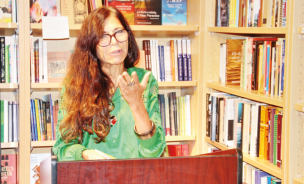
Michel joined Ben Freeman, director of the Democratizing Foreign Policy program at the Quincy Institute, for a webinar on Aug. 29 to discuss key findings from his research.
Michel began by discussing Ivy Lee, also known as “Poison Ivy,” the father of the public relations industry, who “should also be considered the father of the foreign lobbying industry.” While Lee began his career in the early 20th century issuing press releases and doing crisis management for domestic clients, he eventually expanded his work abroad, engaging in public relations work for clients such as Italian fascist Benito Mussolini, the Soviet Union and Nazi Germany. Lee set the precedent—which endures to this day—of working for any type of government as long as the pay is good. “At the end of the day, there is so much money to be made from these regimes,” Michel noted.
Doing spin work for even the worst of foreign governments is entirely legal, as it is protected by the First Amendment. However, Lee’s entrepreneurship prompted Congress to create the Foreign Agents Registration Act (FARA), which requires those working for a foreign client to disclose who they are lobbying on behalf of and how much they are being compensated for their work. FARA quickly fell to the wayside, however, and did not begin to be seriously enforced again until the past decade, according to Michel.
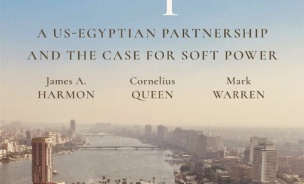
The most prominent recent case involved former Sen. Bob Menendez (D-NJ), who was forced to resign in August 2024 after being found guilty of serving as an unregistered foreign agent for Egypt, violating his oath of office. Michel is hopeful this case indicates the government is taking FARA laws seriously. “If the DOJ [Department of Justice] is willing to go after a figure like that, then I am optimistic that we will see similar prosecutions moving forward,” he said. Menendez was chair of the Senate’s Committee on Foreign Relations at the time of his indictment.
While countries of all types—both democratic and authoritarian—employ agents to directly lobby Congress, many also fund think tanks as a way to influence policy without having to disclose their efforts. Unlike money spent on direct lobbying, money sent to think tanks does not fall under FARA, meaning it does not need to be disclosed. “It is a complete black box of financing that does not have to comply with even the bare-bones registration and disclosure requirements that other American lobbyists have to follow,” Michel noted. “It’s kind of this perfect creation if you want to affect policy without anyone having any idea what you’re doing.”
In return for funding their work, foreign clients such as Azerbaijan, Hungary, Qatar and the United Arab Emirates expect think tanks to issue policy recommendations favorable to their interests—or to simply tone-down or suppress criticism of their countries. “There’s a whole world of think tanks in and around Washington, DC that are constantly hosting events, hosting conferences and especially issuing white papers on what American foreign or domestic policy should be,” Michel noted. These recommendations often have an influence on policymakers. “For legislators that are strapped for time, energy and resources, those white papers can absolutely be a Godsend for certain policy decisions; it makes things very, very easy for them.”
What these policy papers often don’t provide, Michel noted, is an honest analysis of U.S. national interests or an acknowledgment of who funded the research.
—Dale Sprusansky