






Washington Report on Middle East Affairs, March/April 2025, pp. 26-27
Daily Life and Shattered Dreams in Gaza—Young Writers Share Their Stories
By Reem Salim
WHILE CHILDREN around the world go to school, bombing, destruction and blockades continue to make education an impossible dream for the children of Gaza.
Today, the more than 625,000 school-age children of Gaza are denied an education, with no fewer than 45,000 6-year-olds currently unable to begin first grade. Untold numbers of children in Gaza already suffer from trauma-induced psychological disorders like anxiety and post-traumatic stress disorder, conditions only exacerbated by the loss of routine, connection and safety that educational settings provide for children. These same children now face the real possibility of spending a second consecutive year without returning to school.
Israel’s offensive not only targeted homes but also sought to destroy Gaza’s educational infrastructure. Approximately 90 percent of schools have been destroyed or shuttered, even after many had already been converted to shelters for displaced families. As a result of this destruction, children are bearing challenges far beyond their capacities, spending long hours on physically and emotionally exhausting tasks like securing basic sustenance or fleeing from danger from one displacement to another.
This deliberate attempt to destroy the Palestinian education system, described by U.N. experts as a “strategy of educational extermination,” threatens the future of entire generations. Education is the foundation of a child’s proper upbringing, imparting curiosity and knowledge and instilling morals and values. It is where a culture passes its knowledge from one generation to the next and reproduces itself, which is precisely why the occupation targets this infrastructure.
The prolonged absence of education in the lives of these children doesn’t just mean the loss of basic knowledge, it also poses significant threats to their social and emotional development and to the motivation and support schools provide. The psychological toll is immense, with children facing overwhelming feelings of frustration, severe depression and isolation due to the persistent uncertainty about their future.
TENT CLASSROOMS
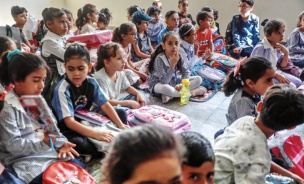
Where schools remain, they have been converted into shelters for the displaced, forcing teachers to put together makeshift classrooms in tents in school yards, and in some camps, simply among other tents. With no desks or chairs, children sitting on the ground, and often only a whiteboard, teachers review simple lessons in core subjects like math, Arabic, English—subjects important for their future—along with Palestinian history, which helps children understand the larger historical context of occupation and violence against Palestinian identity of which their experience is a part.
Most of these teachers are themselves displaced and their homes have been destroyed; many have also lost their job and place of employment. Yet they work tirelessly to provide the children with a school environment where education survives.
The story of my aunt Somaya, who lives in the al-Zuwaida area of Deir al-Balah, illustrates two of the challenges currently surrounding education in Gaza: trying to teach in unsustainable conditions and sending her own children to school amidst danger. She is an English teacher and mother of two—Muhammad, 9, in grade 4 and Adam, 6, in grade 1—who has been displaced; her house was damaged and her family’s supermarket destroyed by bombing, leaving her family without a livelihood.
WALKING TO SCHOOL AMIDST EXPLOSIONS
Every morning, she sends Muhammad and Adam to school despite the constant sounds of drones and explosions that surround the makeshift classroom tents they walk to. Although she constantly fears for their safety, she firmly believes that their education is their hope and sole weapon for building a better future.
The boys must walk for over a half an hour in spite of the danger; rubble, fragments and explosive remnants are found everywhere. There is no transportation available, due to the lack of gas and fuel. Each time she sends them off, she asks herself “will they be able to return to me safely?”
Once, after sending them off to school, they returned unexpectedly. When she asked why, they told her there had been a large explosion near the school, causing its closure and leaving students and teachers with no choice but to return home.
Often, my aunt’s children have gone to school without food, water or money, and they have had to stand in long lines to get basic school supplies like pens and notebooks. Initially, biscuits from aid shipments were distributed to them, though only for a brief period, and hunger has grown since. With such resources no longer available, children have had to adapt to doing without.
UNSAFE CLASSROOMS
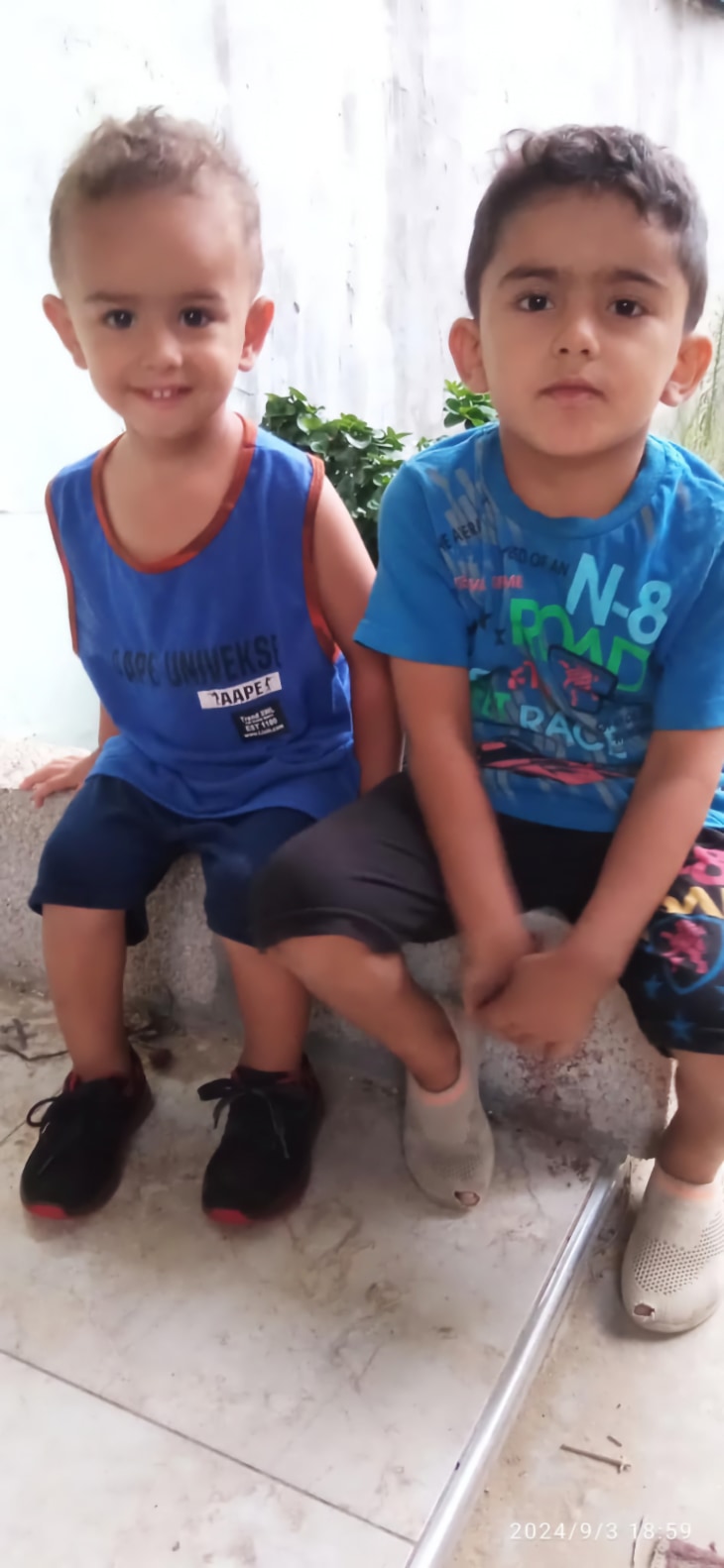
In the school where Aunt Somaya teaches first graders, the cold winter months introduce immense challenges to her mission. Sometimes, heavy rains turn their temporary tent into a muddy swamp. Still, she continues teaching her students despite the conditions, trying to focus on lessons under the leaking tent. She also does recreational and artistic activities with them, like painting their faces and having them build things with colorful clay, in order to relieve them and cheer them up, even if just a little, amidst this turmoil.
The school’s environment is unhygienic. The children lack proper clothing and shoes and often endure freezing classrooms in tattered, dirty clothes. Due to this polluted environment, lack of clean water, deteriorating sanitation, the spread of insects, and insufficient hygiene supplies, many diseases and epidemics have broken out. Lice, skin infections and scabies spread along with viruses that weaken their respiratory and immune systems.
Children are also unsafe outside of school. With damaged clinics and no medicine available, some had to have their diseased limbs amputated instead of treated. Eight children, their immunity weakened from lack of food, have so far not survived the deep cold nights sleeping in a tent. Their small bodies froze in the night.
SHUTTERED SCHOOLS AND SEPARATION
War not only destroys buildings and bodies, but also shatters surviving families. Before the war robbed them of those moments, my aunt’s children were best friends with my younger siblings, sharing joyful times like attending school and studying together. They were so attached that they would cry when it was time to part ways and head home.
Now, we live in different countries and haven’t seen each other in over a year. My siblings deeply miss their childhood moments with their extended family. I have a strong bond with my aunt—she even helped me and my siblings with English lessons. I never imagined I would have to leave Gaza without her, and I don’t know when I will see her again.
My aunt’s story reflects the resilience of thousands of Palestinian families. She continues to fight for her children’s right to education despite inhumane conditions. Facing daily dangers, they prove to the world that education is their tool for survival and their hope for a brighter future.
THE RESPONSIBILITY TO PROTECT PALESTINIAN EDUCATION
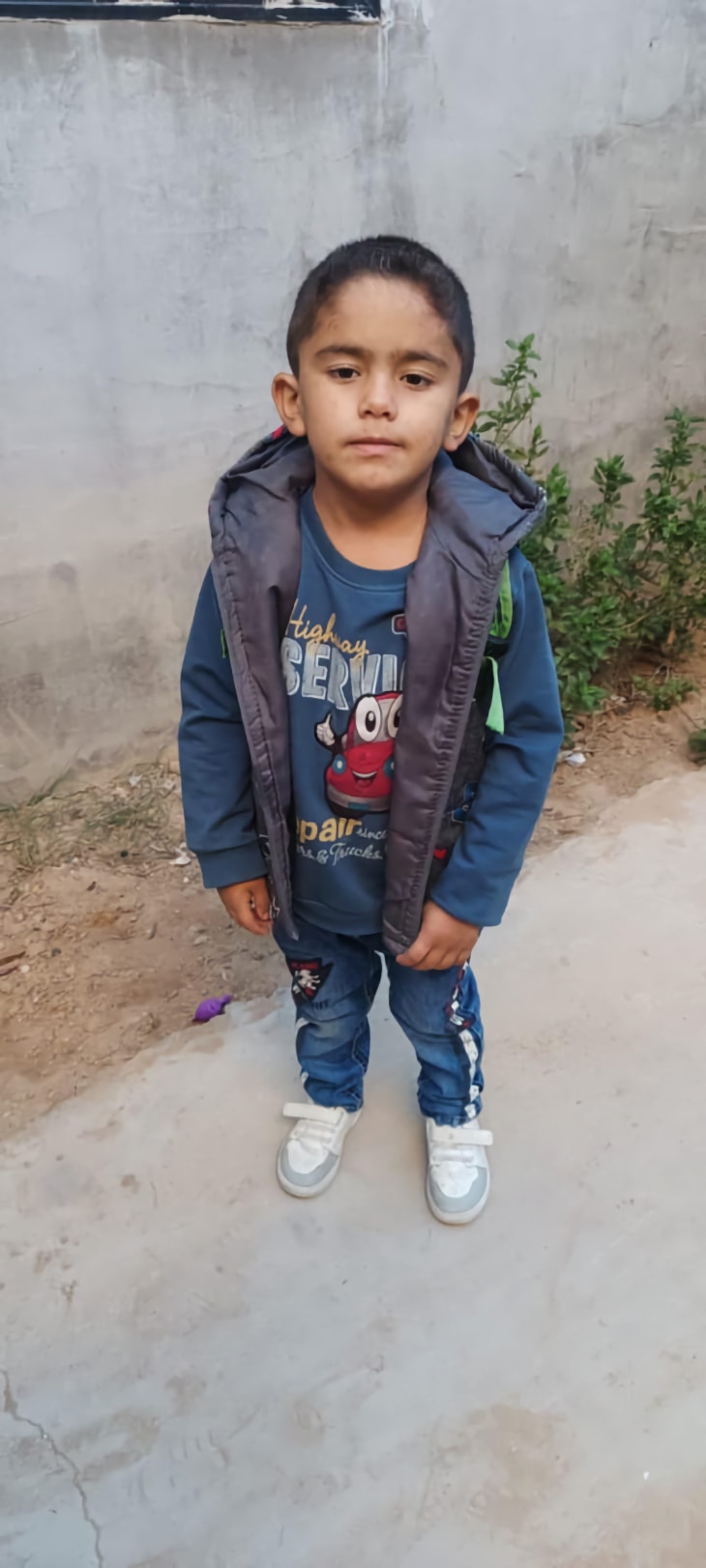
Restoring Palestinian children’s access to schools in the near future is challenging, especially as the occupation persists in its crimes. However, this makeshift method of education cannot be a substitute for the real educational environment provided by functioning schools. The international community must bear the responsibility of establishing ways for students to resume their studies immediately now that a ceasefire has been achieved. Furthermore, plans must be made and implemented to resume education and provide alternatives in case the war resumes in the future.
If the international community fails to ensure protection for children’s education, it reveals a profound collective neglect and abdication of responsibility. Education is not merely a basic right for us; it is a critical pathway to rebuilding our society, offering hope and fostering peace. Denying children access to education only exacerbates psychological trauma, instability and uncertainty about the future.
The future of our children is non-negotiable and must be safeguarded. This is not an issue to be debated, but an imperative to be addressed without delay. Such neglect endangers not only the future of our children but also the very fabric of an entire nation, fostering ignorance and stripping away vital opportunities and rights. Therefore, education is an urgent necessity, and the international community must create the proper conditions for its restoration.
If the world fails to intervene and stop Israel’s ongoing atrocities, who will? If the international community does not hold Israel accountable for its crimes, who will? If human rights organizations do not protect children’s right to education in times of war, who will step in to defend them?
Reem Salim, an English literature student at Al-Azhar University, was displaced to Egypt early in the war. She is training with We Are Not Numbers (WANN), a project to amplify the voices of young Palestinian writers.
(Advertisement)