















Web Exclusive
Daily Life and Shattered Dreams in Gaza—Young Writers Share Their Stories
By Huda Salim
GAZA WAS LIKE a cradle for me, my husband, and my young children, Ahmed and Kareem. I used to visit my sisters and their children from time to time, and those gatherings were like heaven for the kids, where they played endlessly with their cousins and sometimes cried when we left. At other times, I would take them to amusement parks, buying them candy and snacks. When we fled the war in Gaza, it broke my heart to leave this cradle, my homeland, and to bid farewell to my extended family.
Before we fled Deir al-Balah, in the central part of the Gaza Strip, my children attended school enthusiastically and came back excited to share what they had learned, especially lessons about Palestine’s history and heritage. Teachers in UNRWA schools taught with sincerity and diligence, and I never struggled with my children’s education. I was very proud of the schools and deeply grateful for our strong educational system. Our life, despite its simplicity, was perfect for me. I always strove to make them happy and provide everything they needed to enjoy their childhood.
THE PAIN OF DISPLACEMENT
I lost that sense of stability and contentment instantly when I was forced to flee to an unknown destination. I hoped to secure a safe life for my children, far from bombings and the smell of death. I remained optimistic about a brighter future for them. I believed that Egypt would offer us stability and opportunities that were no longer available in Gaza. However, I gradually realized I was wrong. The challenges were far greater than I had imagined. I finally understood that no place is better for me and my family than the homeland where I grew up and whose soil I hold dear.
After arriving in Egypt in February 2024, my husband and I waited a few months, hoping the war would end so we could return home, but after losing hope, we finally enrolled Ahmed, 12, and Kareem, 6, in public schools suitable for their level. I was worried for them because the dialect was unfamiliar, and I had no idea what challenges awaited them at school. My husband reassured me that they would adapt, and he began teaching them some Egyptian phrases until they mastered most of the dialect.
EDUCATION IN EGYPT
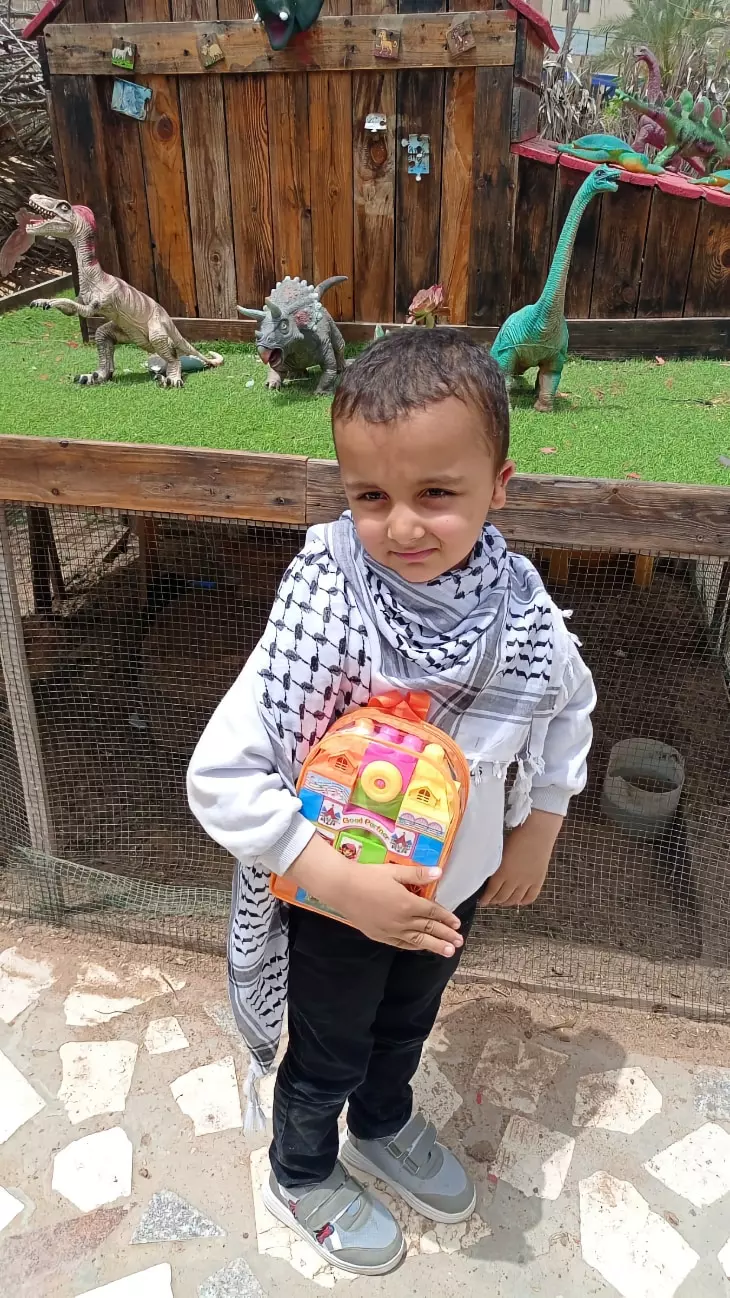
I hoped the Egyptian education system would meet my children’s needs, nurture their potential and make up for the long period they had spent out of school. Unfortunately, it turned out to be an uphill struggle. Many mothers in similar situations complained about the poor quality of education and teaching in schools. While Egyptian universities are strong, the schools are not. The curriculum was challenging and unfamiliar for my children, and the neglect of the teachers made matters worse. Sometimes, Ahmed told me, they stayed outside the classroom due to overcrowding, doing nothing but staring at the teacher from afar while shivering in the cold.
I was furious and distraught, fearing for my children’s future. I later learned that other students had private tutoring precisely because of these problems. I was forced to do the same for my children despite the high costs, which, as displaced people, we could hardly afford. This led in turn to significant debts and psychological pressure. In addition to the tutors, I also spent time and effort daily to teach them and to learn the unfamiliar curriculum, especially about Egyptian history and culture.
On the other hand, I always reminded them of their roots and identity. In this exile, we started feeling the loss of our Palestinian history and culture. Therefore, I made extra efforts, beyond their academic needs, to teach them about our heritage, traditions and customs. I told them the story of the Nakba in 1948, how our ancestors were forcibly displaced at that time. I told them how our family origin goes back to a village called Al-Jiyya, and how the occupation expelled our ancestors to Gaza. I want to make sure that our distance from home will not cause them to forget their origins and that Gaza would always run through their veins no matter how long they stay away.
LIVING IN FEAR
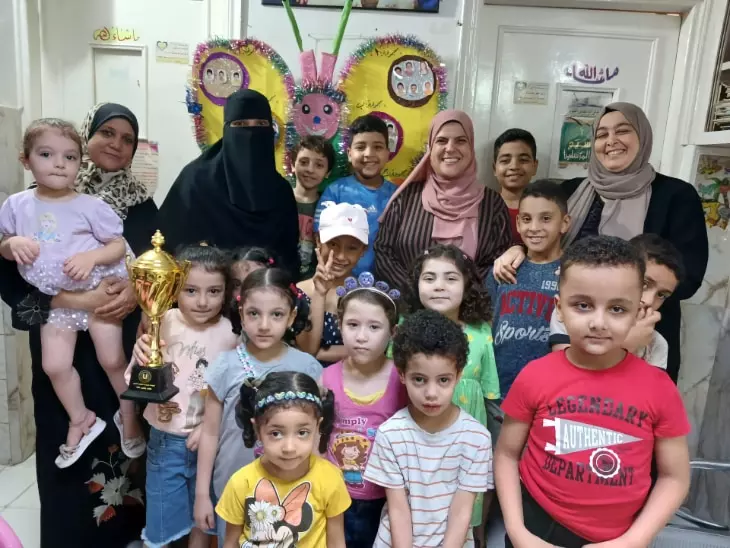
Our challenges extend beyond the Egyptian education system. We also face safety and security challenges in our new environment. There is a recurring phenomenon of child abductions, and the reports and incidents near us made me extremely anxious about my children every time they went to school alone. I witnessed an attempted kidnapping of a young child at school. A woman in black attire entered, claiming she was looking for a child to take to his mother waiting elsewhere. She convinced the poor child with this lie, held his hand and left the school. Fortunately, the school guard noticed her strange behavior, stopped her and began questioning her. His quick thinking uncovered her plan, and he called the police, leading to her arrest.
From that moment on, kidnappings have only worsened, affecting adults as well. I even feared being kidnapped myself if I walked alone. I learned about common kidnapping tactics and now take precautions. As for the school, measures were implemented to ensure children’s safety, but kidnappings continued, keeping me in constant worry. To reduce my anxiety, I began escorting my children to and from school daily, fighting to protect them and secure their future in a country that was supposed to provide us with a safe haven.
I often wonder: We lost peace in Gaza; will anyone provide it for us abroad? Our simplest rights were taken from us; how can they grant us safety, the most fundamental right for every human being? In Gaza, before the war began, safety prevailed. I used to send Ahmed to the store alone without fear. He went to school and rode in cars by himself, like an adult. During holidays, he played with the neighbors’ children, and I never worried because I trusted my countrymen and their culture, built on respecting others and avoiding harm. Often, kind strangers would offer gifts to my children without expecting anything in return.
But here, it’s a completely different reality. We are in a war without missiles. The war of exile and insecurity is no less painful than the one within our homeland. Death follows us wherever we go, as if cursed by the Zionists, never leaving us in peace.
A PLEA FOR PEACE
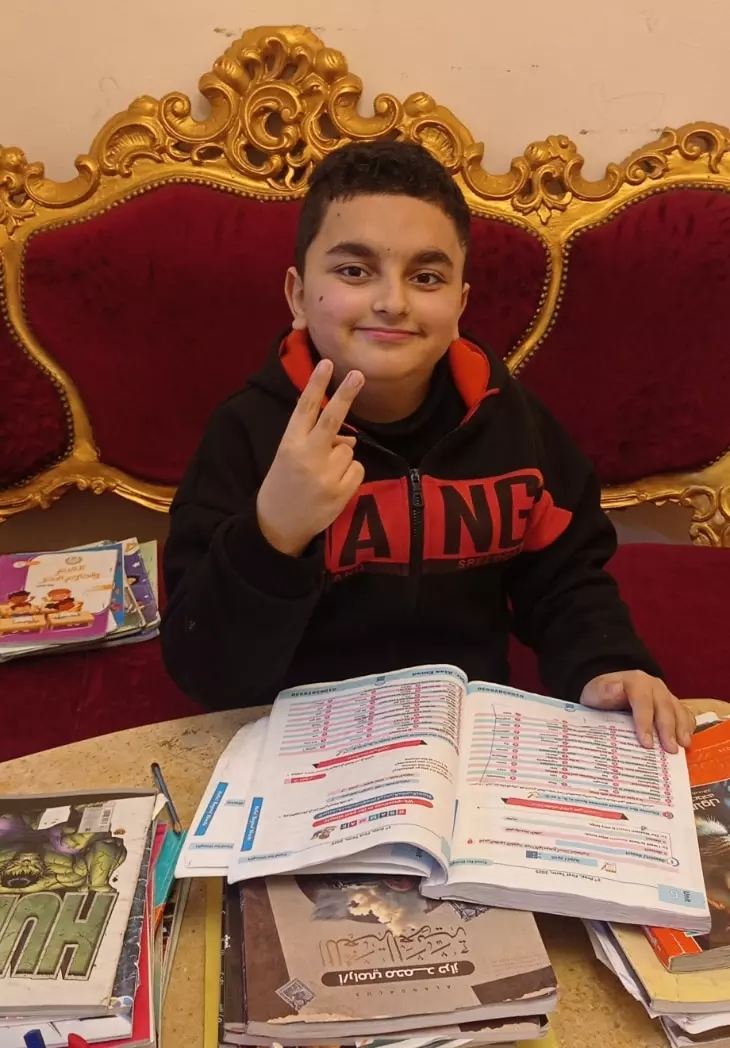
Today, I live entirely for my children’s future. Like many displaced mothers, I carry the weight of ensuring their safety and education in a foreign land. My story is just one of thousands. How many children have been deprived of education or lost their families? How many have faced violence or the trauma of displacement?
All I wish for is that my children live their childhood in safety, receive an education that prepares them for the future, and grow up in a world that values their potential. The pain of displacement may never fully fade, but I hold onto the hope that one day, their lives will be brighter and their struggles will lead to a better tomorrow.
Huda Salim is a mother from Gaza who was working as an engineer before the war that displaced her and her family. She now lives in Egypt.















